Key Takeaways
- The North Pole lies within international waters, with no sovereign nation claiming ownership, while the South Pole is situated on the continent of Antarctica, governed by an international treaty system.
- The North Pole is characterized by a shifting sea ice cover over the Arctic Ocean, whereas the South Pole sits atop a thick, stable ice sheet on land.
- Geopolitical interest in the North Pole revolves around natural resource claims and emerging shipping routes, unlike the South Pole, which is primarily dedicated to scientific research and environmental preservation.
- The governance of the South Pole is regulated by the Antarctic Treaty System, promoting peaceful use, whereas the North Pole lacks a comprehensive international treaty specifically addressing sovereignty and resource rights.
- Climate conditions and accessibility differ significantly, with the North Pole experiencing more seasonal ice melt and the South Pole enduring extreme cold and high elevation year-round.
What is North Pole?

The North Pole is the northernmost point on Earth, located in the middle of the Arctic Ocean amidst shifting sea ice. It holds significant geopolitical interest due to its strategic location and untapped natural resources beneath the Arctic seabed.
Geographical Characteristics
The North Pole sits at 90 degrees north latitude, marking the top of the globe. Unlike land-based poles, it is covered by floating sea ice that varies in thickness and extent with the seasons.
This sea ice is typically a few meters thick but can shift dramatically due to winds and ocean currents, creating a dynamic and unstable environment. The Arctic Ocean beneath is relatively shallow compared to other oceans, averaging around 1,000 meters deep.
Its location means the North Pole experiences six months of continuous daylight in summer and six months of darkness in winter, affecting both climate and navigation.
Political Status and Claims
No country owns the North Pole, as it lies in international waters beyond any nation’s exclusive economic zone. However, several Arctic-bordering countries, including Russia, Canada, and Denmark, have submitted claims to extend their continental shelves toward the pole.
These claims are evaluated under the United Nations Convention on the Law of the Sea (UNCLOS), which allows nations to assert rights over seabed resources beyond their standard economic zones if they can prove geological extension. This has led to competing submissions but no definitive sovereignty over the pole itself.
The absence of a specific treaty for the North Pole leaves its governance fragmented, relying on existing international maritime laws and bilateral agreements for regional cooperation.
Natural Resources and Economic Potential
The Arctic region surrounding the North Pole is believed to contain vast reserves of oil, natural gas, and minerals, sparking interest from resource-hungry nations. Melting sea ice due to climate change is making these resources more accessible than ever before.
Beyond hydrocarbons, the area is also rich in fish stocks, which are becoming increasingly important as Arctic waters warm. However, exploitation efforts are hindered by extreme weather, ice conditions, and environmental concerns.
Emerging shipping routes like the Northern Sea Route promise shorter transit between Europe and Asia, enhancing the North Pole’s economic strategic value. International cooperation and regulation will be crucial to balance development and preserve fragile ecosystems.
Environmental and Climatic Conditions
The North Pole experiences a harsh polar climate with temperatures ranging from around -40°C in winter to near freezing in summer. Sea ice extent fluctuates seasonally, retreating significantly during warmer months and expanding in winter.
Rapid Arctic warming, over twice the global average, is causing unprecedented ice melt, threatening local wildlife such as polar bears and seals. This warming also opens new maritime pathways but poses risks to indigenous communities and global weather patterns.
Environmental monitoring is conducted by various international scientific programs, focusing on climate change impacts and ecosystem health in this sensitive region.
What is South Pole?
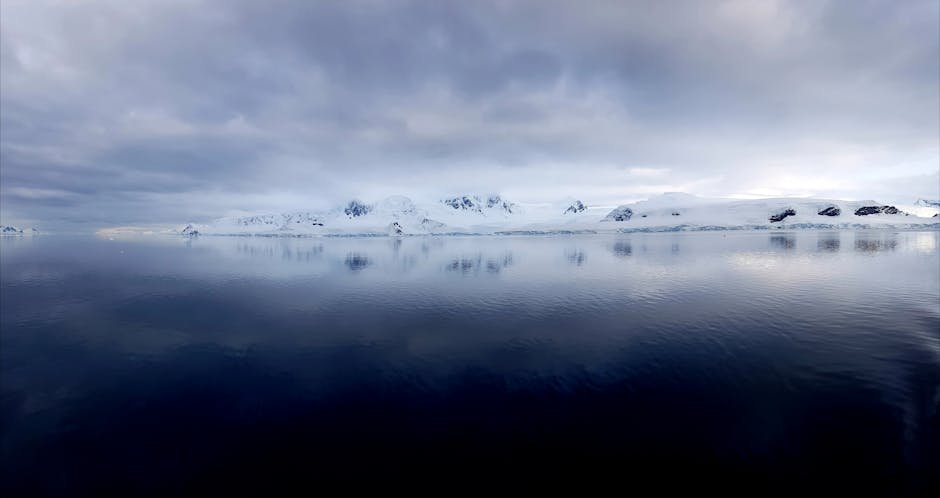
The South Pole is located on the continent of Antarctica and marks the southernmost point on the planet. Unlike the North Pole, it is situated on a vast landmass covered by a thick ice sheet and is subject to an international treaty system governing its use.
Geographical and Physical Features
The South Pole lies at 90 degrees south latitude, resting on the Antarctic Plateau at an elevation of about 2,800 meters. The Antarctic ice sheet beneath is several kilometers thick, forming the largest single mass of ice on Earth.
This ice sheet is stable compared to the floating sea ice of the Arctic, providing a solid foundation for scientific research stations. The region experiences continuous darkness during the austral winter and constant daylight in summer, similar to the North Pole but with colder temperatures.
The extreme altitude and cold combine to create one of the harshest climates on Earth, with temperatures sometimes dropping below -80°C.
International Governance and Treaties
The South Pole and Antarctica as a whole are governed by the Antarctic Treaty System, signed in 1959 by multiple nations to promote peaceful use and scientific cooperation. This treaty prohibits military activity, mineral mining, and nuclear testing on the continent.
More than 50 countries have acceded to the treaty, which establishes Antarctica as a scientific preserve and suspends territorial sovereignty claims. This unique legal framework fosters international collaboration and environmental protection.
The treaty also mandates environmental assessments for activities and protects native fauna and flora, emphasizing conservation over exploitation.
Scientific Research and Environmental Significance
The South Pole hosts several permanent research stations, including the United States’ Amundsen-Scott station, conducting studies in glaciology, astronomy, and climate science. Its isolation and stable ice make it an ideal location for long-term environmental monitoring.
Scientists at the South Pole contribute vital data on global climate change, atmospheric composition, and cosmic phenomena, influencing international environmental policies. Research here helps understand ice sheet dynamics and sea-level rise implications worldwide.
Environmental preservation efforts are critical given the continent’s vulnerability to global warming and human activity impacts.
Accessibility and Human Presence
Access to the South Pole is challenging due to extreme weather and remoteness, requiring specialized aircraft and ice-capable vehicles. Human presence is largely limited to scientific personnel during the summer months, with smaller teams overwintering in harsh conditions.
Tourism is strictly regulated under treaty guidelines, with only a few hundred visitors allowed annually to minimize environmental disturbance. Infrastructure is minimal and designed to have a low ecological footprint, reflecting stringent conservation priorities.
Despite these challenges, international cooperation ensures continuous research and monitoring, maintaining the South Pole as a hub of scientific endeavor.
Comparison Table
The following table outlines key distinctions between the North and South Poles across various geopolitical, environmental, and logistical dimensions.
| Parameter of Comparison | North Pole | South Pole |
|---|---|---|
| Location Type | Sea ice over Arctic Ocean | Landmass covered by Antarctic ice sheet |
| Sovereignty and Governance | No nation owns; governed by maritime law and UNCLOS | Governed by Antarctic Treaty System, no territorial sovereignty recognized |
| Climate Characteristics | Seasonal sea ice melt with milder polar temperatures | Extremely cold, high-altitude plateau with permanent ice cover |
| Natural Resource Potential | Significant oil, gas, and mineral deposits beneath seabed | Strictly protected; mineral exploitation prohibited |
| Human Presence | Temporary research camps, indigenous peoples in surrounding regions | Permanent research stations with rotating scientists |
| Environmental Protections | Limited regional cooperation; no comprehensive treaty | Strict environmental regulations under international treaty |
| Accessibility | Accessible seasonally via icebreaker ships and aircraft | Remote, accessed by specialized aircraft and overland traverse |