
I always find the first warm breeze of spring irresistible, and making wreaths becomes a little ritual that stretches across windowsills and kitchen counters. Spring Floral Wreath Making Ideas have been a way for me to gather scraps of ribbon, a few stems from the market, and a handful of memories from backyard walks.
There is something about the palette of early blooms and the soft scent of fresh greenery that makes each wreath feel personal.
These Spring Floral Wreath Making Ideas lean into texture, scent, and color so each piece tells a small story of the season.
Wildflower meadow hoop with loose blossoms

This wreath carries the feeling of a roadside meadow after a warm afternoon. Tiny daisies tuck casually between feathery grasses while buttercup tones peek through with a gentle contrast.
I loved the way the blossoms caught light at different hours, throwing soft shadows over the hoop. There was a natural, slightly untamed energy that made it feel like a bouquet that had decided to curl into a circle.
The scent was faintly herbaceous and the texture moved from papery petals to crisp seedheads, inviting another glance each time I passed the door.
Steps
- Select a lightweight hoop base and gather a mix of small dried and fresh wildflowers along with soft grasses.
- Bundle small groups of blossoms and secure them around the hoop, overlapping clusters so the wreath reads continuous.
- Tuck in a few airy seedheads and loose grasses to create movement and soften any visible wiring.
- Add a simple loop of twine for hanging and let the wreath rest so fresh stems settle into place.
Soft pastel tulip and ranunculus cluster
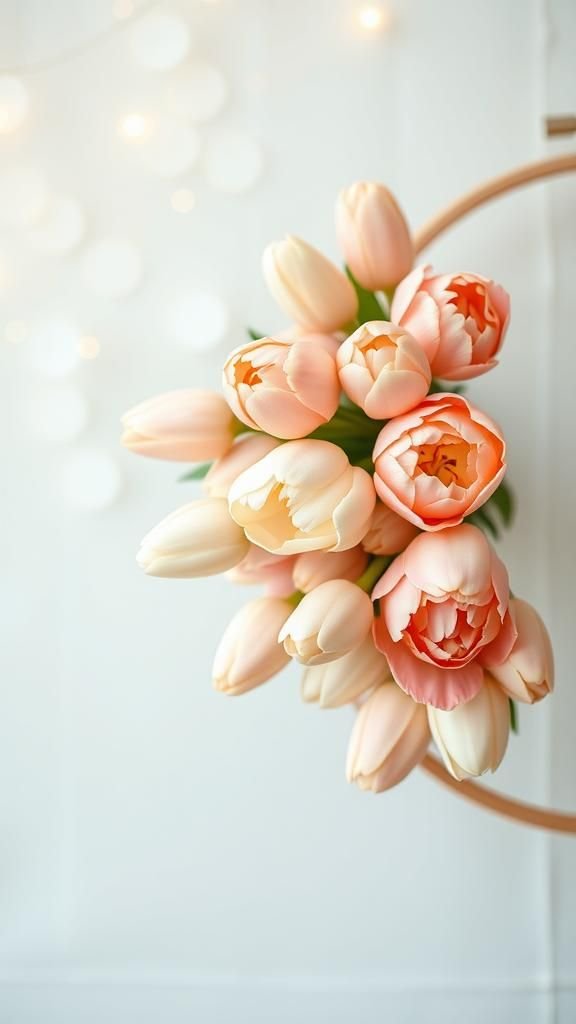
There was a weekend when I brought home a handful of pastel tulips and a few ranunculus, and they quickly transformed into a wreath that felt like a whispered greeting. The tulip cups provided gentle arcs while ranunculus added buttery layers and depth.
Petals held a dewy sheen in the morning light, and the mix of pale peach, blush, and cream created a calm, tender palette. The overall impression was elegant but approachable, like wearing a soft scarf on a cool spring morning.
It seemed to lift the mood of anyone who walked past the doorway.
Steps
- Choose a sturdier hoop and collect tulip stems and ranunculus with similar pastel hues.
- Cluster blooms into dense groupings and attach them to the hoop so the arrangement reads as a focused band.
- Soften the edges with small sprigs of greenery and shorter stems tucked into gaps.
- Secure a discreet hanging loop and refresh water-sourced stems as needed to extend bloom life.
Lavender and linen dried wreath for scent
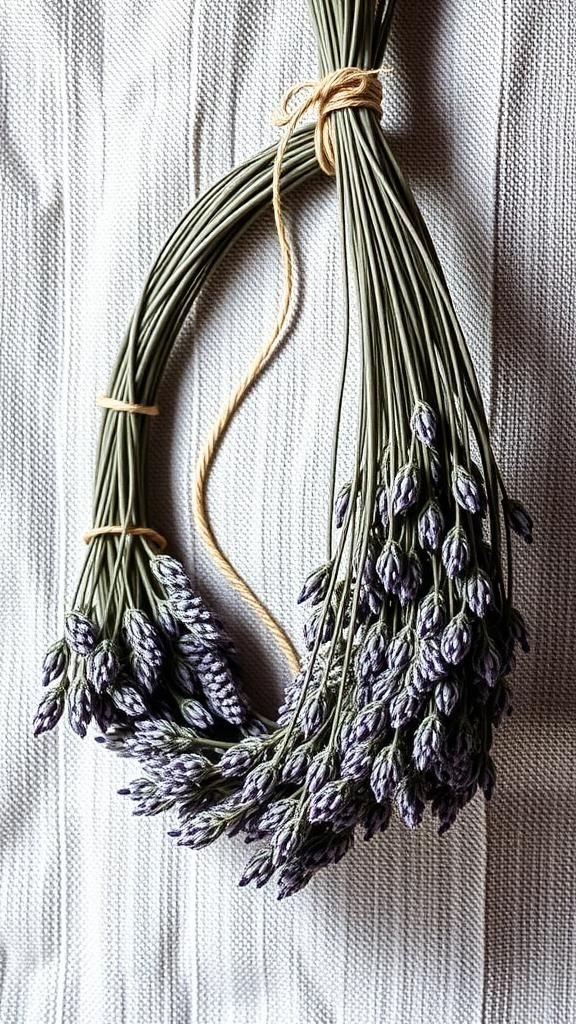
This wreath felt like bringing a calm afternoon indoors. Bundles of dried lavender threaded together produced a persistent, soothing aroma that seemed to follow me down the hallway.
The stems had a papery, slightly brittle texture, and the muted purple faded to silvery tones that played beautifully against a linen-covered wall. There was a quiet, nostalgic quality, as if the wreath held onto slow summer days.
I enjoyed how it balanced visual restraint with a strong olfactory presence, turning a simple circle into a soft, aromatic accent that invited a slow breath.
Steps
- Gather dried lavender bunches and a lightweight circular base suitable for dried stems.
- Wrap small lavender bundles around the base, overlapping to create a consistent coverage and pronounced scent.
- Tie stems with natural twine and trim ends for a neat outline while leaving some tips loose for texture.
- Hang in a cool, dry spot where the fragrance can circulate without direct sunlight fading the color.
Eucalyptus circle with airy greenery swirls
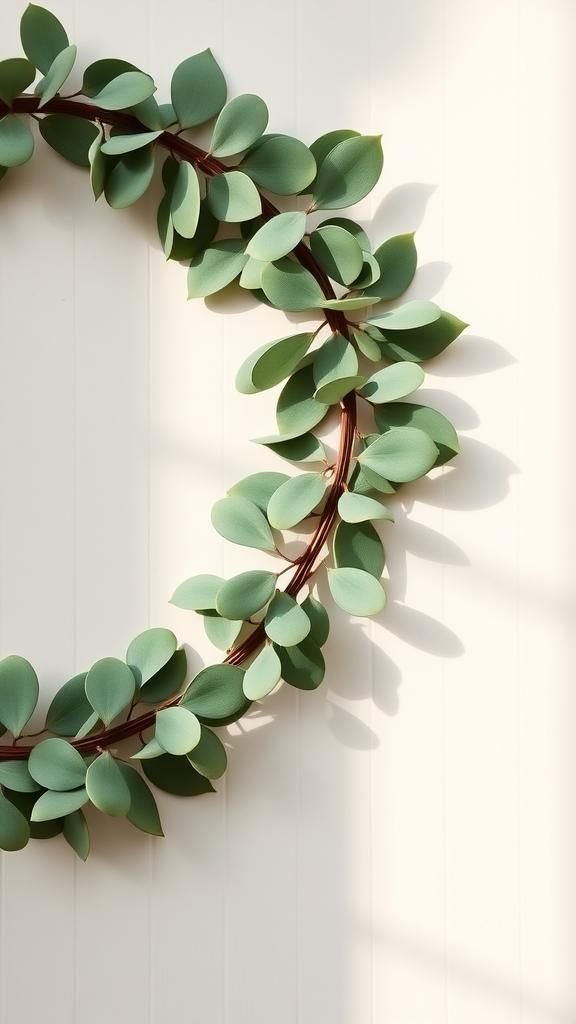
There was an instant serenity that came from a eucalyptus wreath with loose greenery swirls. The rounded leaves offered a cool, matte green that felt modern yet welcoming.
I liked how the scent had a clean, menthol edge that brightened a room without overpowering it. Leaves fluttered softly whenever a door opened, creating a gentle sound that became part of the home’s rhythm.
The look was airy rather than dense, which made the front entry feel open and inviting, like a quiet nod to the season without fuss or excess.
Steps
- Select several eucalyptus branches and a flexible hoop base to support light foliage.
- Layer branches around the hoop, angling leaves so they sweep in the same direction for a flowing effect.
- Secure stems at intervals and allow some leaf tips to extend beyond the hoop for movement.
- Add a slim ribbon or loop for hanging and place where gentle breezes can ruffle the leaves.
Succulent garden ring with mossy accents
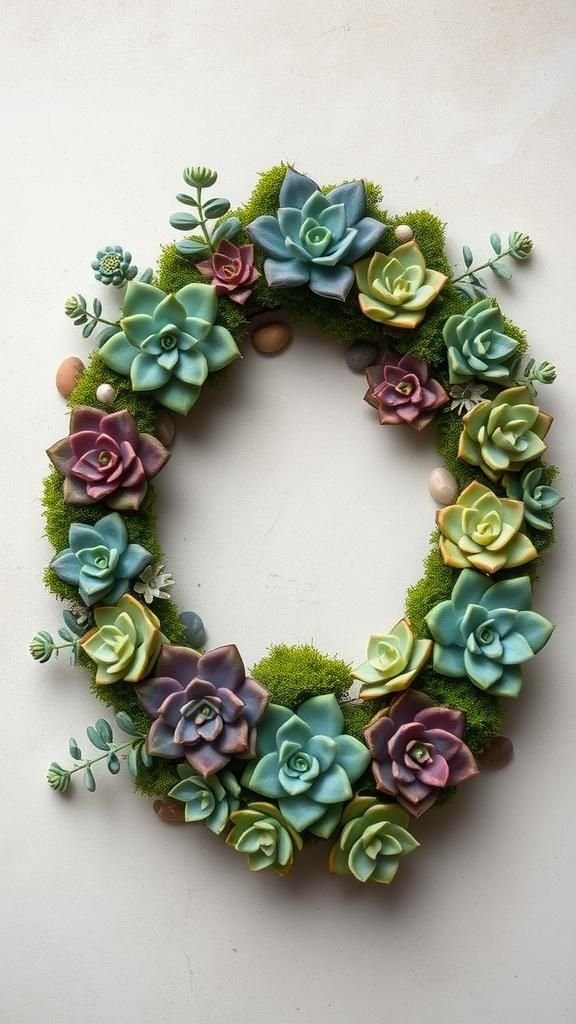
A succulent wreath suggested a miniature garden captured in a circle. Jelly-like leaves contrasted with the softness of cushiony moss, and the colors ranged from silvery greens to hints of dusky purple.
I appreciated the sculptural quality; each rosette looked like a tiny sculpture nestled in a nest of moss. The textures begged for touch without being sticky, and light brought out glossy highlights on some leaves.
It had a durable, low-maintenance feel that stayed fresh-looking for weeks, and it seemed to anchor the space with its understated, botanical elegance.
Steps
- Prepare a sturdy ring base and moss padding to hold soil or adhesive for succulents.
- Arrange a mix of small succulent rosettes into clusters, pressing them into the moss to secure.
- Fill gaps with tufts of moss and tiny accent stones for texture and contrast.
- Mist lightly and hang where bright indirect light will keep succulents happy.
Citrus slice and herb scented spring ring
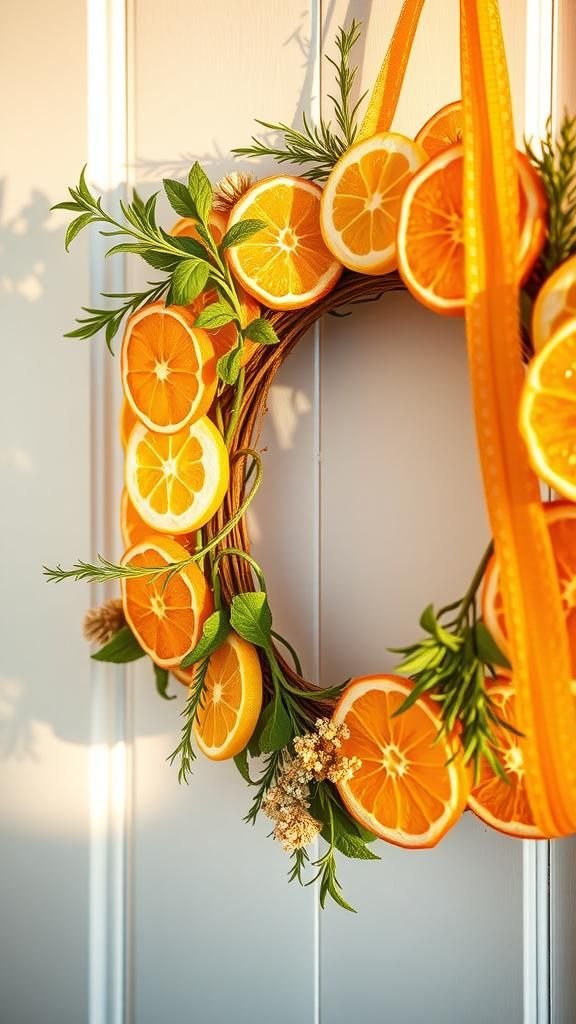
There was a bright morning when dried citrus slices and clipped herbs came together on a ring, and the air seemed sunnier for it. The orange and lemon rounds offered translucent jewel-like circles that caught the light, while rosemary and mint introduced a peppery, cooling scent.
The combination felt cheerful and fresh, like a glass of iced tea on the porch. Texture mixed crisp citrus edges with feathery herb sprigs, and the colors popped against a neutral door.
It felt like a small seasonal celebration that made guests smile before they even stepped inside.
Steps
- Prepare dried citrus slices, rosemary sprigs, and a medium-weight wreath base.
- Attach citrus slices evenly around the ring and intersperse herb sprigs for fragrance.
- Add small clusters of dried flowers or seed pods to bridge gaps and enrich texture.
- Hang in a bright spot where the aroma can lift the entryway without direct sun on the citrus.
Paper blossoms in cheerful watercolor tones
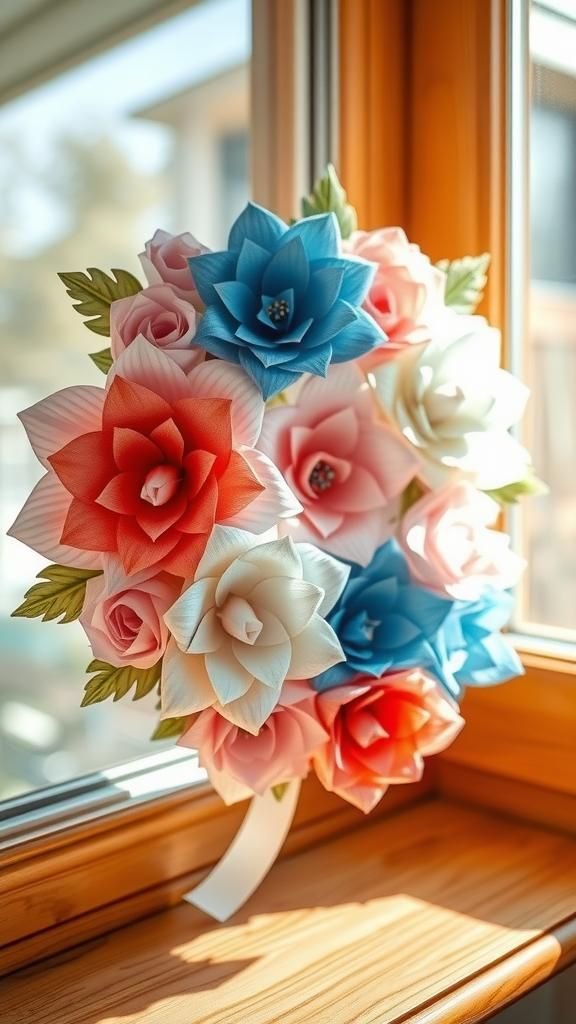
Handmade paper flowers brought a playful, painterly mood to the wreath collection. Petals bore soft edges and faint watercolor washes that made each bloom feel unique, like a page from a sketchbook come alive.
The texture read slightly fibrous and lightweight, and the color bleeding was charming in a way that felt personal. I remember setting it by a sunny window where color reflected gently on the sill.
It had a crafted, whimsical quality that resisted being overly tidy, and it seemed to invite compliments about the little imperfections that made it human.
Steps
- Cut and shape paper petals, layering them into full flower heads with adhesive or wiring.
- Arrange paper blooms around a lightweight hoop, grouping colors to create visual balance.
- Add painted leaves and small paper buds to soften transitions between clusters.
- Attach a discreet loop for hanging and keep away from damp areas to preserve paper texture.
Tiny budded grapevine mini wreath trio
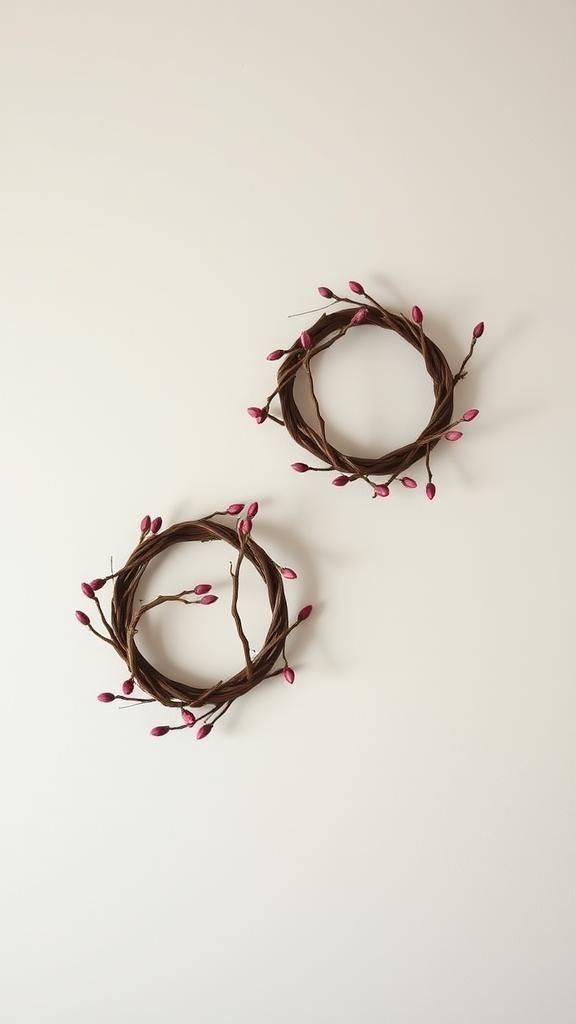
A set of small grapevine wreaths with tiny budded stems created a sweet, rustic cluster on the wall. The twiggy grapevine base had a warm, woody scent and a rugged texture that contrasted nicely with the small, velvety buds.
I liked arranging them in a casual group because each one felt like a little window into spring. There was a rhythmic repetition that felt comforting, and the scale made them feel delicate rather than imposing.
Ragged edges and natural imperfections only added to the charm, as if they had been collected during a leisurely walk.
Steps
- Form small grapevine rings and weave in tiny budded stems at regular intervals.
- Secure buds with thin floral wire and tuck stray twig ends into the vine for a tidy look.
- Cluster the mini wreaths on a ribbon or hang them in a loose group on the wall.
- Adjust spacing to create a balanced visual trio that reads as a single arrangement.
Ribbon-streamed hoop with tactile flowing loops

A ribbon-streamed hoop brought movement into what might otherwise be a static object. Sashes of silk and linen trailed from the bottom, catching the slightest breeze and showing off soft patterns and textures.
I enjoyed how the ribbons introduced rhythm and a touch of softness without overshadowing the floral accents. Colors ranged from muted neutrals to lively spring pastels, and the tactile contrast between smooth silk and rougher linen made fingers linger.
It felt like dressing a doorway with a ribboned greeting rather than hanging a decoration, and it created a friendly, animated welcome.
Steps
- Select a variety of ribbons in complementary textures and colors, cutting lengths for a cascading effect.
- Attach ribbon loops to the hoop base so they hang freely and overlap slightly for fullness.
- Add small floral clusters or greenery at the top or sides to anchor the ribbons visually.
- Tie a secure hanging loop and place where gentle drafts can animate the streamers.
Peony drama: full bloom focal wreath

A peony-focused wreath felt indulgent in the best way, like wearing a floral crown that’s all about lushness. Large, layered blooms created a voluminous focal point that caught the eye from across the room.
Petal edges varied from satiny to softly frilled, and the scent was a gentle, floral sweetness that hovered nearby. I found that the visual weight of the peonies made other design choices feel secondary, which was freeing.
It read as celebration rather than decoration, and the sheer abundance of petals invited long looks and a sense of pleasure in simple beauty.
Steps
- Source large peony blooms or realistic silk alternatives and a sturdy hoop to support their weight.
- Cluster blooms densely in a focal area while balancing greenery around the perimeter.
- Fill in any visible gaps with smaller blossoms or leaf sprigs to achieve fullness.
- Secure hanging hardware capable of supporting the wreath’s concentrated bloom weight.
Monochrome all-white textured spring wreath design
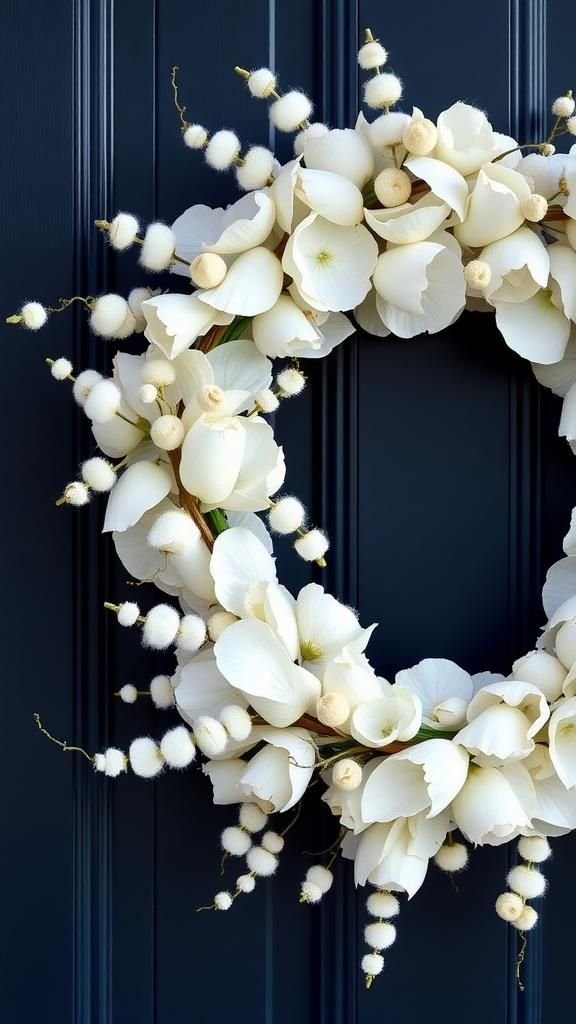
An all-white wreath felt quietly elegant and unexpectedly playful through its textures. Creamy blooms paired with cottony seed heads and pale leaves produced a soft, layered look that read bright without loud color.
The variety of surfaces—from velvety petals to papery pods—created a tactile richness that kept the palette simple but interesting. I placed it on a darker door where it served as a calm punctuation mark, and the light reflected off the whites differently at dawn and dusk.
It seemed to soften the entrance, offering a refined welcome that was easy on the eye.
Steps
- Assemble white blooms, pale seed heads, and neutral foliage on a lightweight wreath base.
- Layer elements to build texture while keeping the overall palette strictly monochrome.
- Tuck accent pods and small buds into gaps for depth and tactile variation.
- Hang where changing light can reveal subtle shifts in white tones throughout the day.
Butterfly accents perched among tiny florals
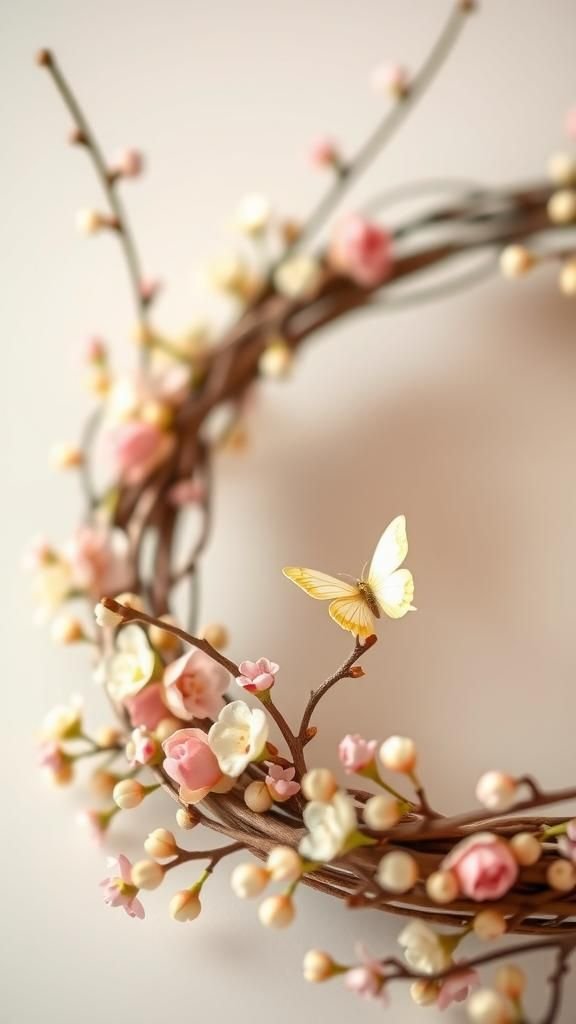
Adding delicate butterflies to a floral wreath felt like freezing a happy moment just after they landed. Tiny wings in translucent hues rested among small blossoms and leafy sprigs, introducing a whimsical note.
The butterflies brought a sense of movement even when the wreath was still, and their light, paper-like bodies contrasted pleasingly with soft petals. I liked the playful surprise they offered to anyone who looked closely.
The combination read cheerful without being childish, and it made the wreath feel animated, as if a small portion of spring had decided to stay put on my door.
Steps
- Choose lightweight butterfly accents in translucent or pastel materials and a supportive wreath base.
- Place small floral clusters and foliage to create landing spots for the butterflies.
- Affix butterflies discreetly so they appear naturally perched among the blooms.
- Check balance and spacing to maintain a gentle, whimsical composition.
Herb-scented rosemary and thyme circular bouquet

A wreath built from herbs felt homely and practical, as if the scent itself could cook dinner. Rosemary provided sturdy, pine-like notes while thyme offered a soft, earthy counterpoint.
The stems had a tactile sturdiness and the overall aroma was enlivening without being sharp. I enjoyed leaving it near the kitchen doorway where the fragrance mingled with coffee and toast.
Visually, the fine leaves created an intricate lacework that read fresh and purposeful. It was an understated piece that suggested hospitality and kitchen warmth rather than overt decoration.
Steps
- Select fresh rosemary and thyme stems and a manageable hoop base for herb bunches.
- Tie small herb bundles and space them evenly around the ring, overlapping for continuity.
- Add a few tiny flowering herb sprigs to soften the silhouette and enhance scent.
- Hang near the kitchen so the aromatic herbs can mingle with household scents.
Mixed pastel ombré blossom gradient hoop
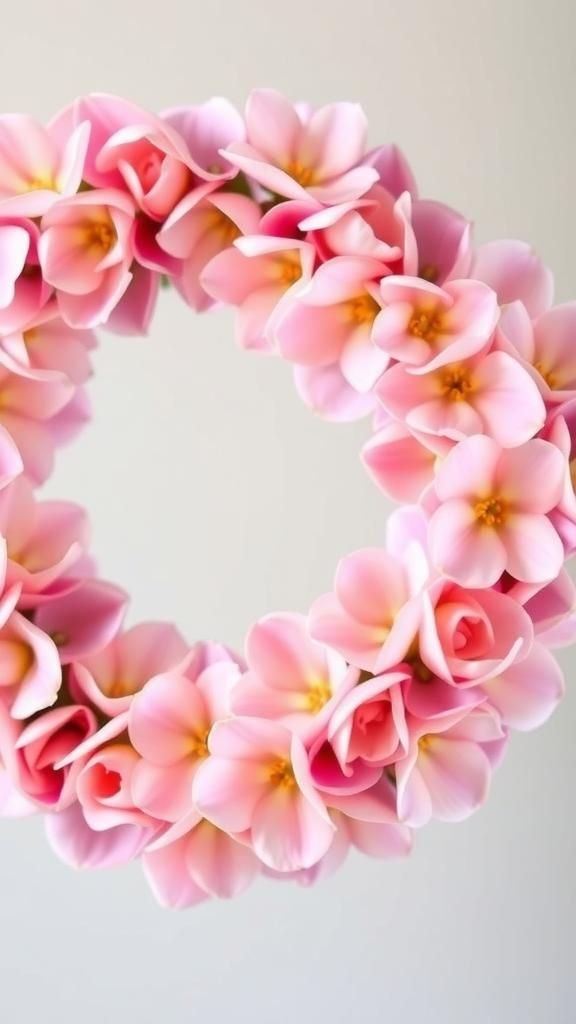
Creating an ombré effect across the hoop produced a satisfying visual flow that felt almost musical. Blossoms shifted from pale blush through peach into soft lavender, the transitions gentle and harmonious.
The eye moved naturally along the gradient, discovering subtle color tales in the petals. Texture shifted too, from smoother blooms to more ruffled ones, so each band felt slightly different while remaining cohesive.
I found myself noticing small shifts in hue depending on the light, and the overall impression was lighthearted and artistically tuned without feeling fussy.
Steps
- Gather blossoms in a range of pastel hues and a medium hoop for arranging color bands.
- Group flowers into color families and attach them in sequence to create a smooth gradient.
- Blend transition zones with mixed-color clusters and select foliage that complements the palette.
- Step back to ensure the ombré reads fluidly and adjust as necessary for balance.
Vintage lace and pearl bloom wreath

Combining lace and pearls with tiny blooms produced a wreath that felt like a found family heirloom. The lace offered delicate patterns and a whispery texture while scattered pearls caught light like small morning dew.
Fresh or silk blooms softened the antique elements and created a romantic mood. I liked how it read both feminine and understated, as if it had been pressed between book pages and then gently revived.
It felt suited to a cottage door or a soft entryway, bringing a hint of nostalgia without feeling overwrought.
Steps
- Select lengths of vintage lace, small pearls, and delicate blooms for a romantic composition.
- Layer lace around the hoop and secure blooms and pearls into the fabric folds for an integrated look.
- Cluster tiny blossoms to create soft pockets and hide any fastening points.
- Hang where soft light amplifies the lace pattern and pearl sheen.
Mossy twig nest with tiny spring bells
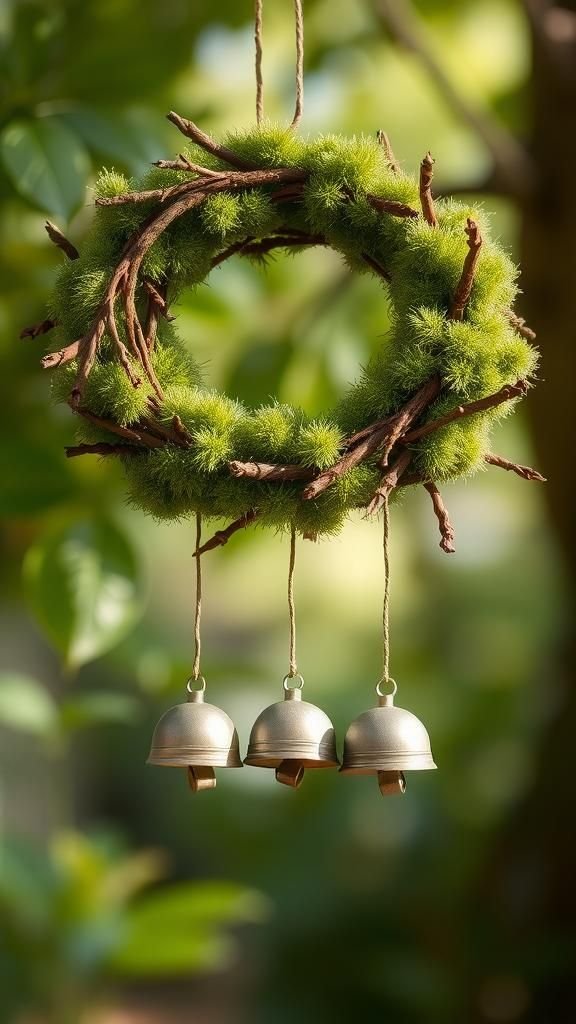
A mossy twig nest wreath had a woodland quietness about it, punctuated by tiny metal bells that chimed when the breeze passed. The moss brought a lush, velvety green and the twigs added a rustic, tactile backbone.
Bells offered a sweet, bright note that contrasted the muted natural palette and added an auditory delight. I loved how the piece felt both grounded and playful, like a glimpse into a small, secret habitat.
It seemed especially fitting for a porch where sounds of the yard mingled with the wreath’s gentle tinkle.
Steps
- Build a twig base with natural moss tucked into crevices for a nest-like texture.
- Secure tiny bells at intervals so they hang slightly below the wreath for movement.
- Add small sprigs of greenery or tiny flowers to integrate the bells visually.
- Hang where gentle breezes can set the bells ringing softly.
Yarn pom-poms and felt flowers playful ring

This wreath took me back to craft afternoons with friends, full of color and soft textures. Fluffy yarn pom-poms popped against felt flowers that had crisp edges and a handmade character.
The overall feel was cozy and cheerful, with a tactile quality that invited touch. Colors could be bright or muted, and the soft materials made the wreath feel almost like a textile collage.
It brought a sense of warmth to a room in a way that felt informal and welcoming, like a favorite sweater draped over an armchair.
Steps
- Create yarn pom-poms in chosen colors and cut felt flower shapes for contrast.
- Attach pom-poms and felt flowers to a fabric-wrapped hoop in a balanced arrangement.
- Fill gaps with smaller pom-poms or felt leaves to achieve cohesive texture.
- Add a sturdy hanging loop and display where soft materials can be appreciated up close.
Minimalist single-stem modern hoop arrangement style
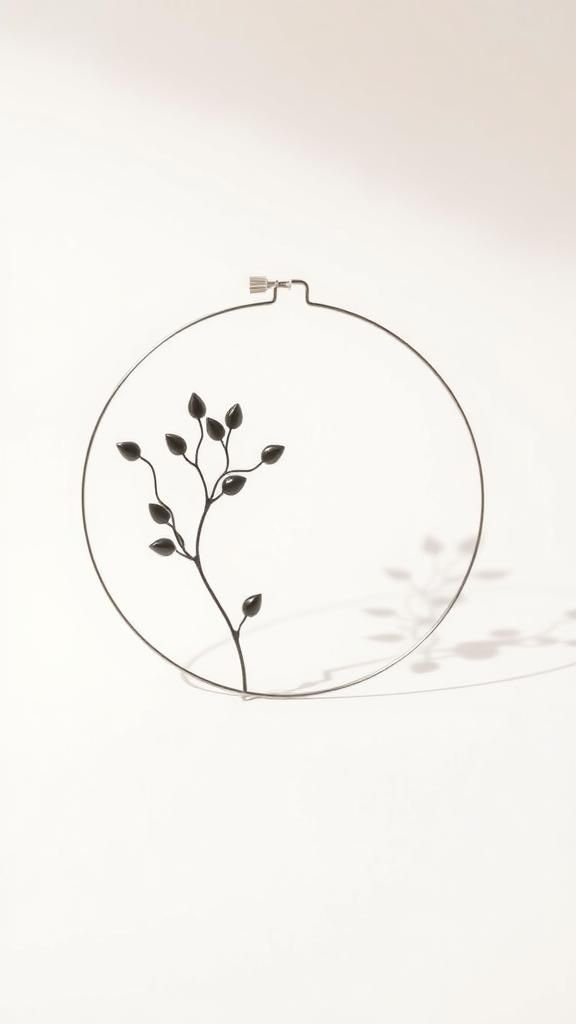
A single-stem arrangement on a thin hoop felt like a quiet statement. One elegant branch, perhaps a blossom or a sculptural leaf, created a focal line that read modern and refined.
Negative space played a big role, allowing the eye to travel and appreciate form and silhouette. I enjoyed the restraint; the sparse composition made the chosen stem seem more precious.
It fit well on narrow doors or above simple console tables, offering a breath of spring without asserting itself. It was a reminder that less can feel intentional rather than empty.
Steps
- Choose a striking stem with good form and a slim hoop to complement its shape.
- Secure the stem at a point on the hoop so it arcs gracefully without appearing crowded.
- Keep the remainder of the hoop bare to emphasize negative space and stem silhouette.
- Hang at eye level to showcase the simplicity and sculptural line.
Bright berry clusters and soft leaves wreath
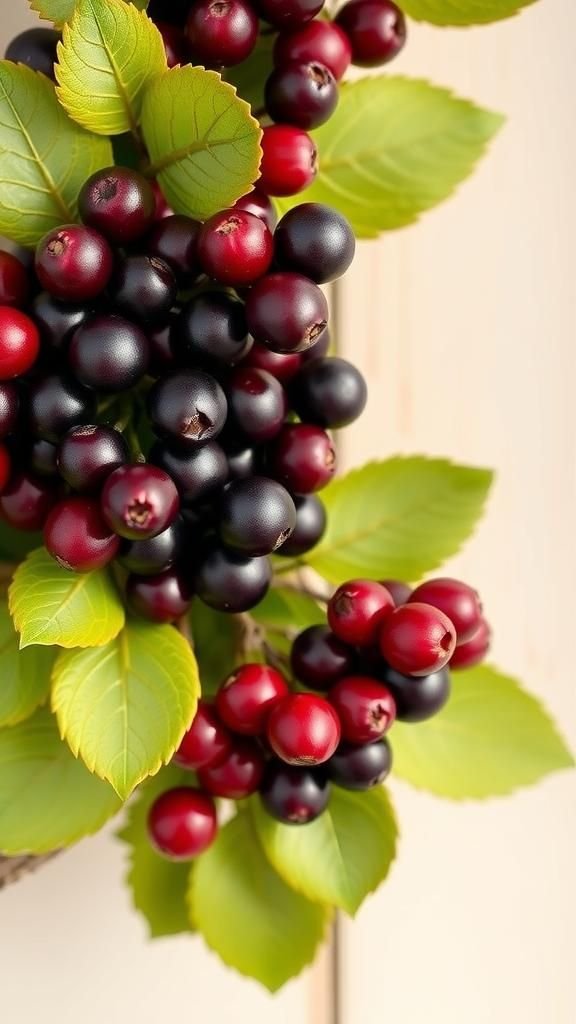
A wreath dotted with berry clusters felt lively and tactile, like a promise of fruit to come. Glossy berries contrasted with matte leaves, creating a little sparkle across the circle.
The color pops were joyful without being loud, especially when paired with soft green foliage. I liked the playful tension between the shiny, round berries and the flatter, feathered leaves.
It read seasonal in a way that felt optimistic and bright, and it was pleasing to run a hand along the wreath to feel the different surfaces.
Steps
- Gather faux or preserved berry clusters and complementary foliage for texture contrast.
- Attach berry clusters evenly around the wreath, nesting leaves to soften transitions.
- Fill in any thin spots with small sprigs or tiny accent buds for balance.
- Hang where the berry gloss can catch sunlight and add a cheerful shimmer.
Children’s handprint flower wreath keepsake idea

A handprint flower wreath became one of those objects that carried more than decoration. Little painted handprints turned into petals and made a charming, personal ring full of personality.
The uneven edges and paint smudges were delightful reminders of small hands busy at work. It felt warm and unpretentious, a piece that families could laugh about and cherish.
Displaying it often led to stories about the day it was made, and the wreath served as a colorful snapshot of a creative moment that was both messy and meaningful.
Steps
- Create handprint templates or paint directly onto cardstock and cut out petal shapes once dry.
- Arrange handprint petals around a sturdy base, overlapping edges to form flower shapes.
- Add simple centers and greenery cutouts to finish the floral look.
- Seal lightly if desired and hang where family members can enjoy the keepsake.
Door-handle petite hoop for front-porch charm

A small hoop designed for a door handle felt like a little wink of hospitality. Compact blooms and tiny sprigs scaled to the handle created an intimate accent rather than a full-size statement.
I appreciated how it added personality without overwhelming space, and it was delightfully easy to switch for different moods. The tactile proximity to hands coming and going gave it a practical warmth, and the modest scale made it feel like a friendly hello.
When evening light caught the tiny petals, the wreath read cozy and considered in equal measure.
Steps
- Choose a small hoop and proportionally scaled blooms and foliage for a petite display.
- Build a compact cluster and attach it securely so it sits flush against the door handle.
- Ensure the hanging loop is snug and does not interfere with door movement.
- Swap or refresh small elements seasonally for a simple update to the entryway.