
Soft blues and rugged indigo find new life in upcycled denim home decor crafts, turning worn jeans into textured cushions, rustic baskets, and cozy throws that feel familiar and lived-in. Small scraps become layered patches and tactile seams that invite touch and visual curiosity.
I remember a rainy afternoon when a pile of faded jeans turned into a soft pillow on the sofa; upcycled denim home decor crafts brought warmth and a faint cotton scent into the room, and that worn pocket kept tiny mementos nearby for weeks.
Patchwork denim throw pillow with contrasting seams
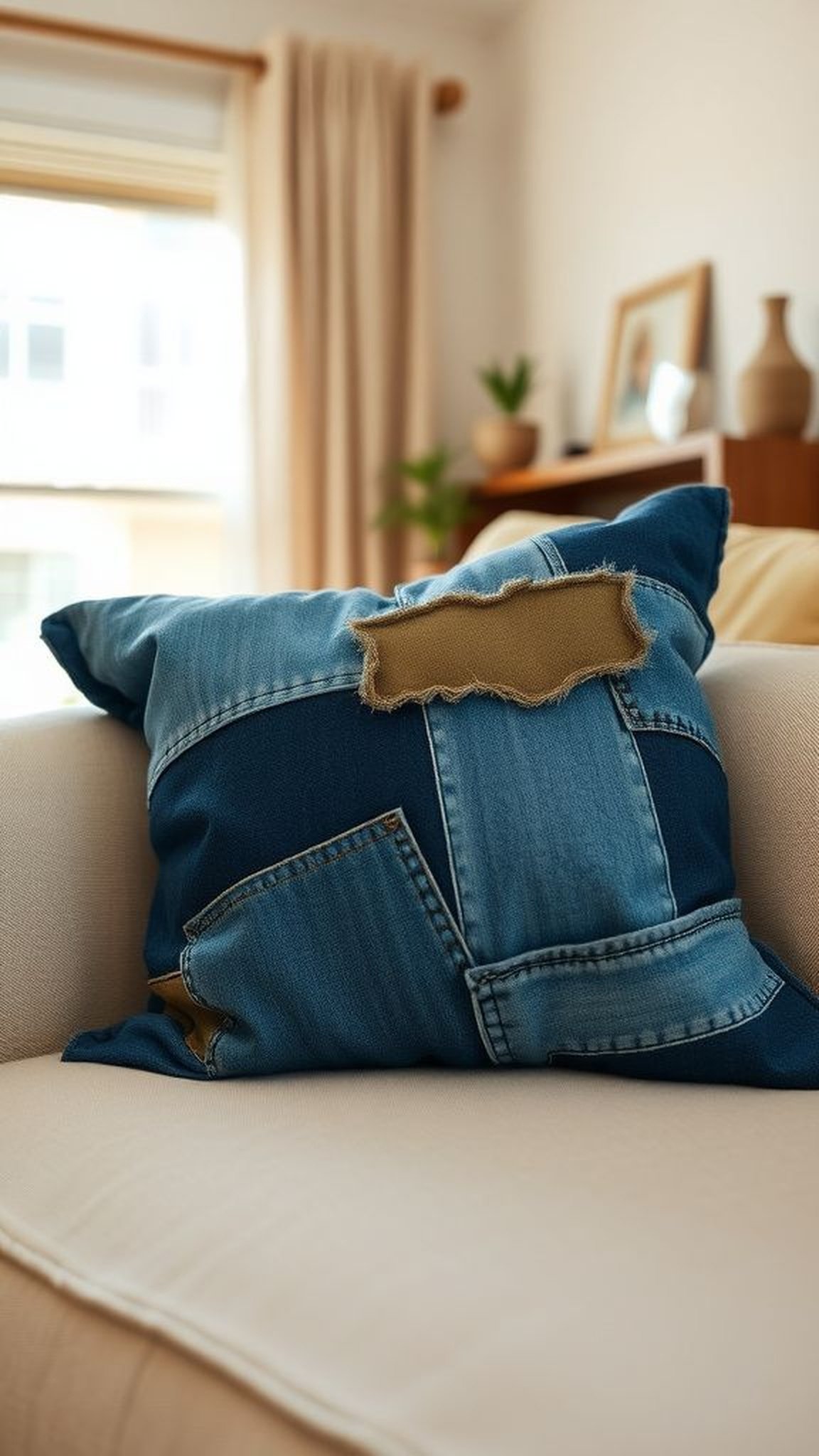
I keep a squishy throw pillow stitched from mismatched jean panels on the couch and it has a humble charm. The patches show different indigo ages, from crisp deep blue to pale sun-washed edges, and the seams add slightly raised ridges under the palm.
The fabric hums of cotton and laundromat memories, and the weight feels reassuring when curled against. There is a comfort in thumb-tracing the worn arcs and frayed hems, the pillow offering quiet texture and a lived-in presence that brightens the sofa.
Steps
- Lay out assorted denim panels to choose an arrangement that pleases the eye.
- Stitch panels together along edges to form a front piece and prepare a matching back piece.
- Join the front and back along three sides, leaving an opening for filling.
- Stuff with soft filling until the pillow feels plump and balanced.
- Close the remaining seam with neat stitching and finish any exposed raw edges.
Braided denim rag rug for cozy floors
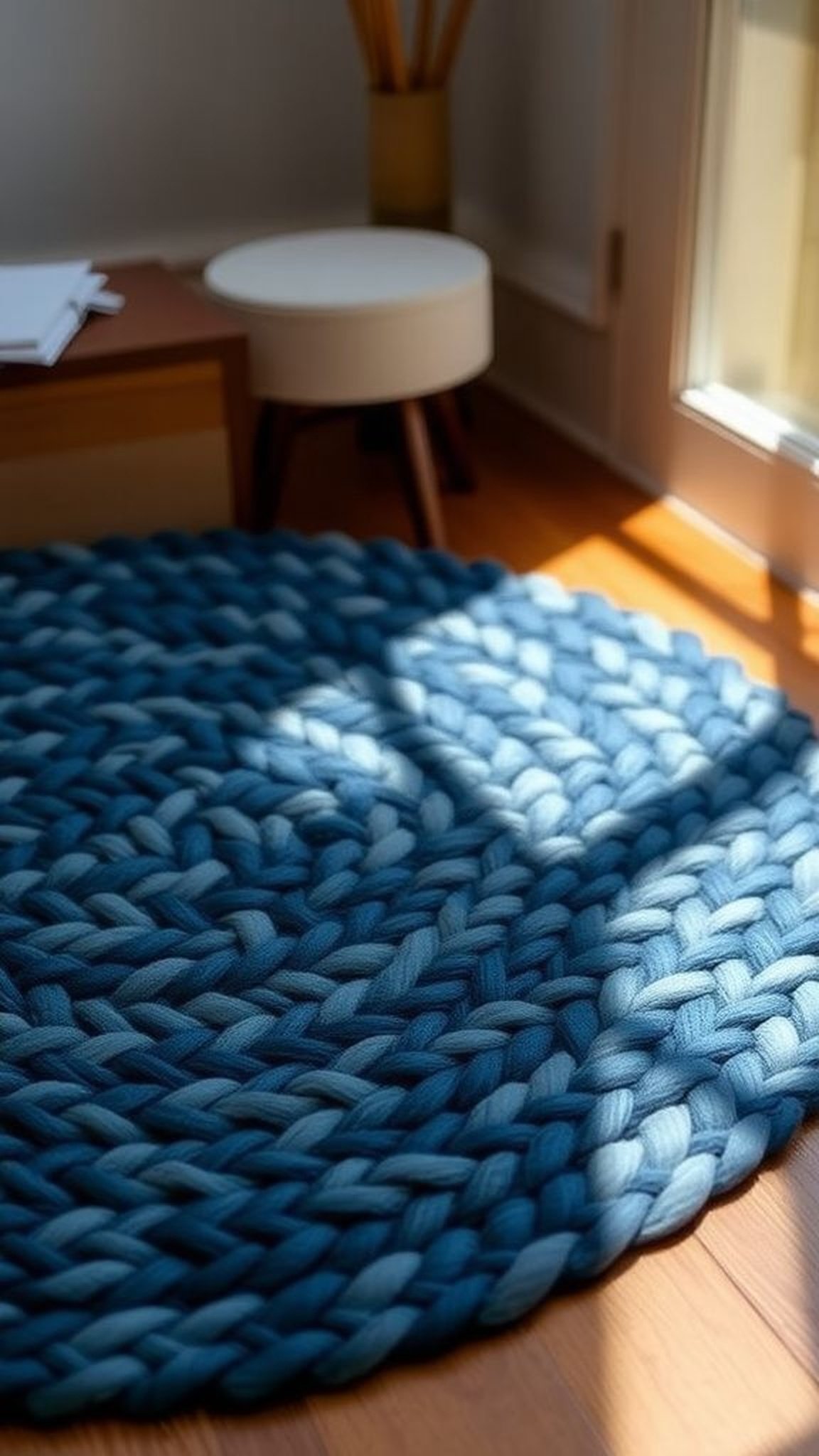
A braided denim rag rug over a wooden floor gives a room an earthy, worn-in mood. Walking across it produces a quiet, muffled sound underfoot and the braided thickness cushions each step.
Hues shift from inky blue to chalky faded bands, and the braided edges show little flecks of white threads that catch the light. The rug carries a faint scent of cotton detergent, and its irregular shape feels organic, like a small island that invites bare feet and slow mornings with warm mugs and soft light sliding in.
Steps
- Cut denim into long strips and gather them into bundled groups for braiding.
- Braid groups of strips and flatten each braid gently while aligning ends.
- Coil a braid into a circular form, stitching the adjacent edges together as the coil grows.
- Continue adding and stitching braids until the rug reaches the desired size.
- Secure loose ends and trim stray threads for a tidy finish.
Stitched denim coasters with visible raw edges
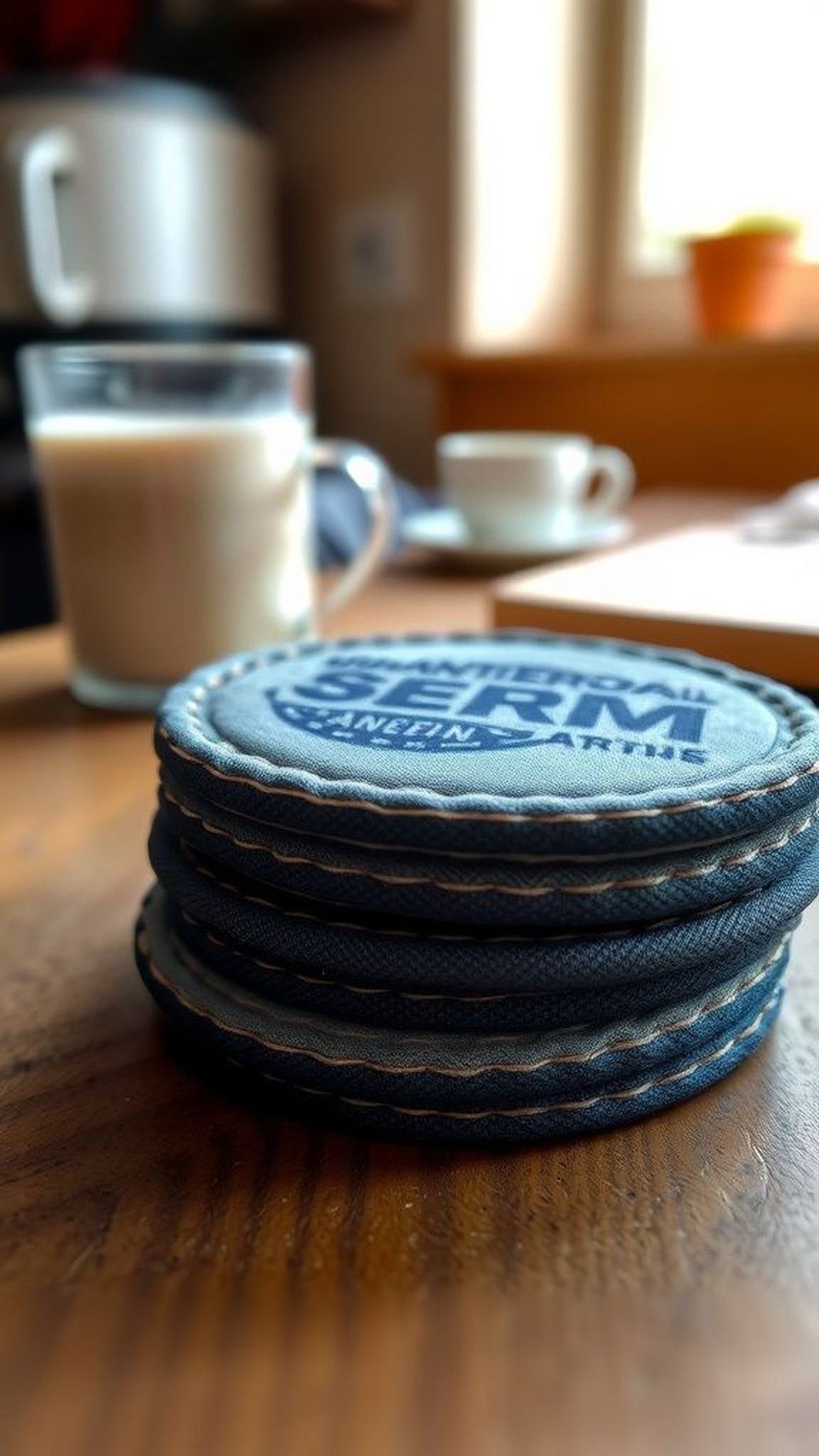
A small stack of stitched denim coasters sits by the kettle and feels comforting under a cup. Their surfaces are cool and slightly rough from the worn fibers, while the raw edges whisper of casual making.
Each coaster bears a tiny contrast stitch or a pocket corner that adds character, and the indigo rings left by past spills make them feel familiar rather than pristine. Sliding a warm mug across them, the denim grabs a little of the heat and produces a soft, muted thump, anchoring kitchen moments in texture and color.
Steps
- Cut denim into uniform circles or squares and layer as needed for thickness.
- Stitch around the perimeter, incorporating a visible seam or decorative stitching.
- Optionally add small padding inside for extra insulation and stitch closed.
- Trim any excess and lightly fray edges for a relaxed look.
- Wash gently to soften fibers and reveal subtle indigo variations.
Rustic denim and lace wreath for doorway charm
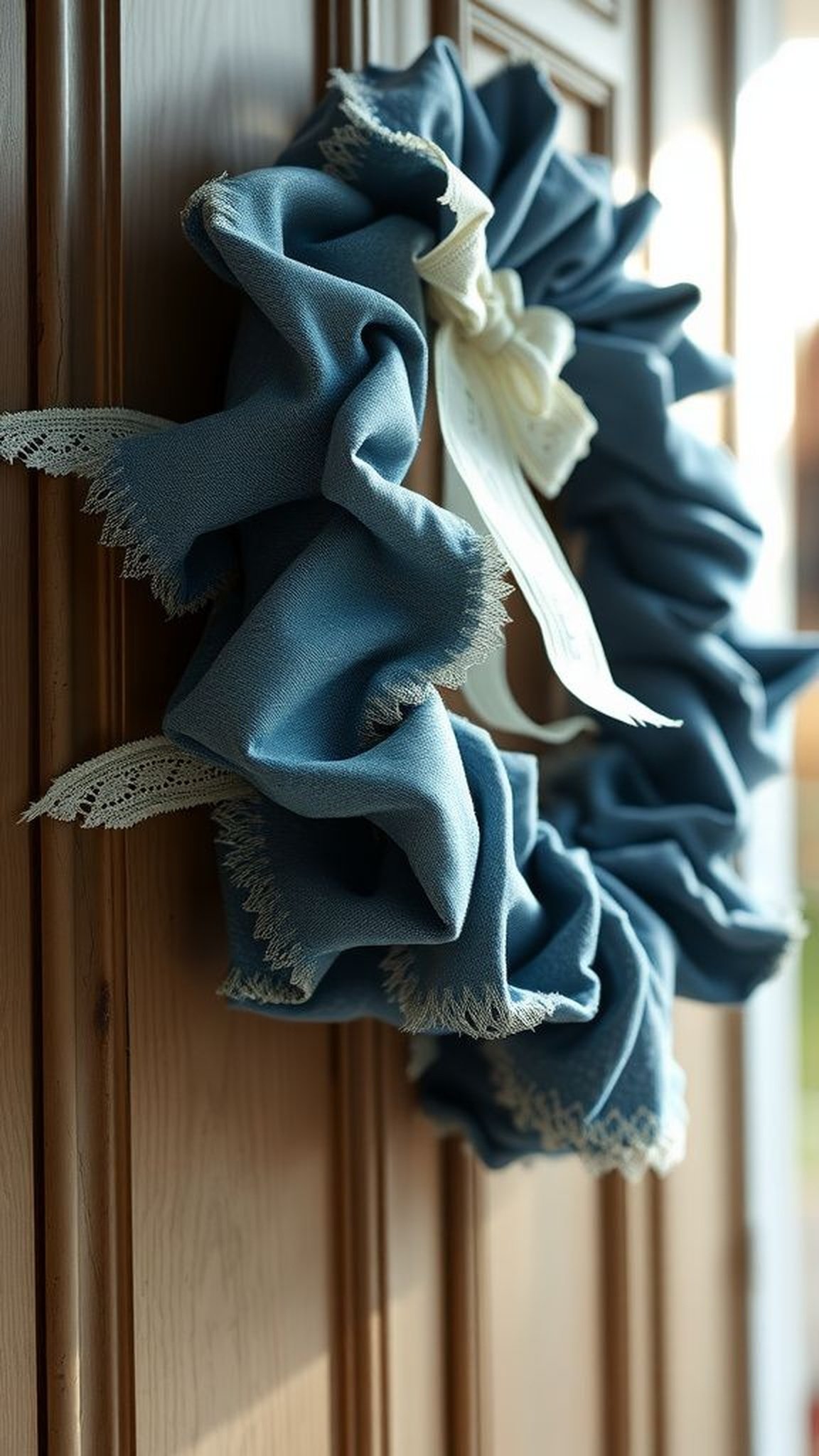
A wreath woven from denim strips and threaded lace hangs on the door and greets guests with a mix of rugged and delicate textures. The denim brings weight and muted blues, while lace peeks out as soft white whispers.
The frayed denim ends and tiny lace loops catch morning light, casting faint shadows on the door. From a few steps away it reads as handmade and thoughtful, and up close the interplay of rough cotton threads and airy lace feels unexpectedly tender, a gentle balance of sturdy and sweet.
Steps
- Wrap a sturdy ring form with denim strips, overlapping for full coverage.
- Weave or tuck lace ribbons among the denim to create contrast and soft accents.
- Secure ends with stitching or small fasteners hidden beneath folds.
- Add small decorative elements like buttons or tiny pockets if desired.
- Hang the wreath securely on a door hook and adjust layers for balance.
Layered denim wall tapestry with tactile texture
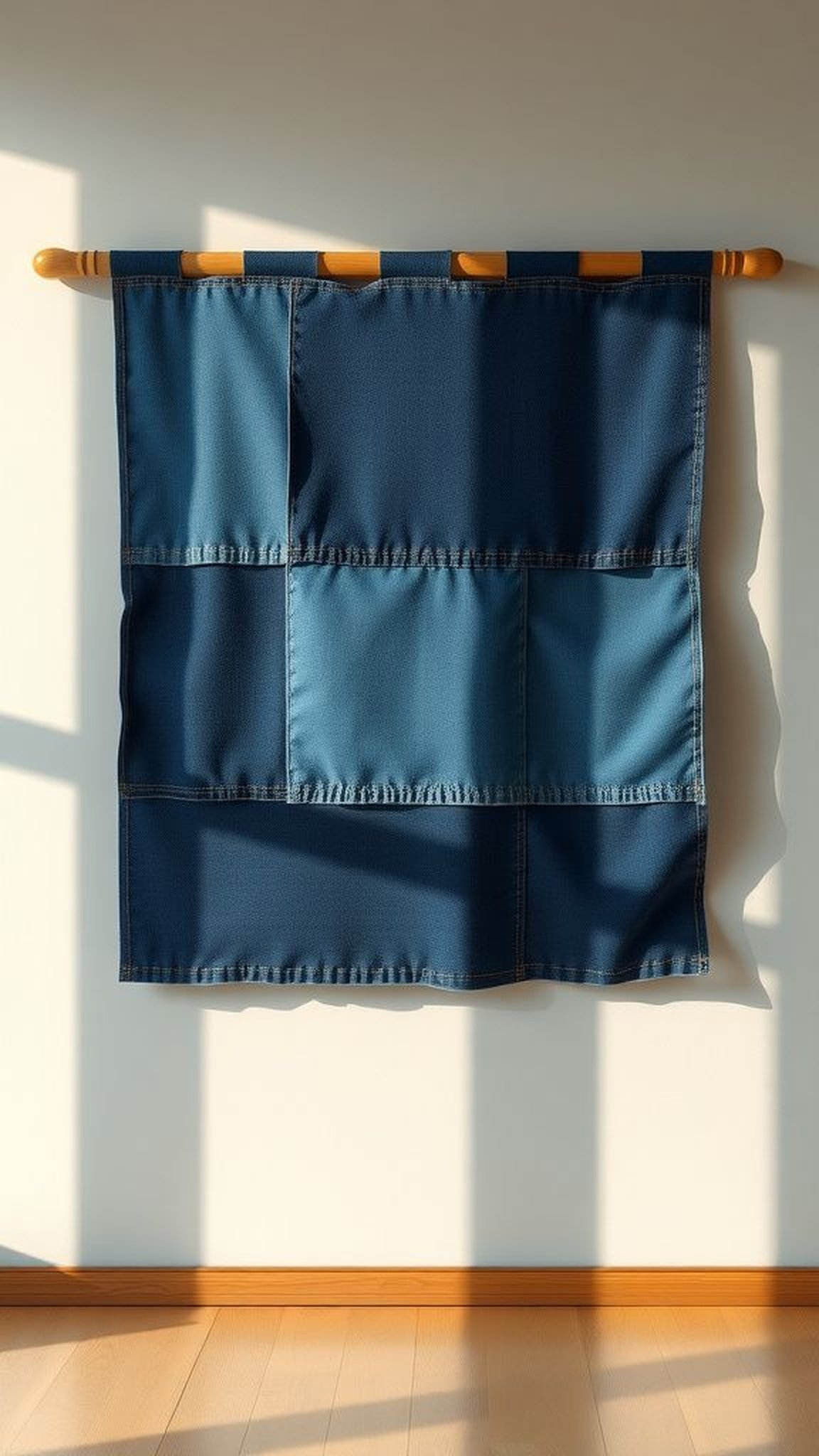
A wall tapestry crafted from layered denim panels gives a blank wall an instant story. Sections of darker and lighter denim overlap like worn maps, and the raised seams create shadowed lines that shift as the light moves.
There is a quiet satisfaction in running fingers over the layered hems and feeling the patchwork height. The worn surfaces capture light differently, some parts gleaming faintly while others absorb it into deep blue.
Hanging nearby, it softens room acoustics and offers a tactile focal point that invites lingering glances and slow appreciation.
Steps
- Arrange denim panels on a flat surface to plan a pleasing layered composition.
- Stitch overlapping panels along edge lines to secure layers and create texture.
- Attach the assembled tapestry to a backing fabric for added stability.
- Mount a wooden dowel or frame across the top and secure the tapestry for hanging.
- Hang on the wall and adjust layers to achieve the desired drape.
Denim-covered storage basket with cuff details
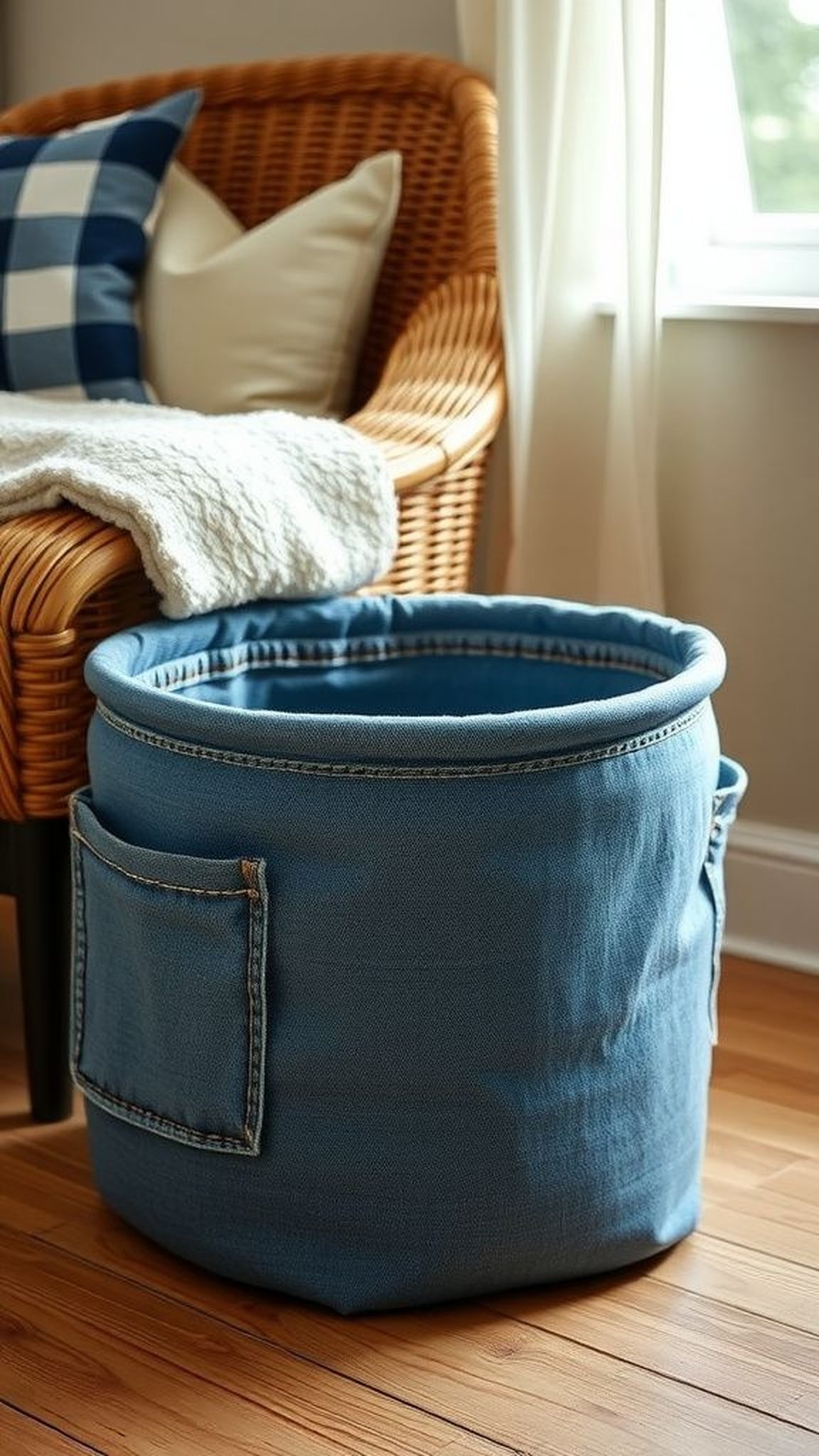
A round storage basket wrapped in denim sits beside a reading chair, holding throws and magazines with casual ease. The denim cuffs from old jeans add playful flaps and pockets that peek outward, offering tiny nooks for small objects.
The fabric surface has a grainy feel and the seams create faint ridges that the fingers trace when reaching inside. The basket’s presence adds a lived-in, practical softness to the corner and the mix of structured wicker and pliant denim makes it feel both neat and relaxed at once.
Steps
- Measure the basket circumference and cut denim panels to cover its exterior.
- Wrap and stitch the denim securely around the basket, aligning seams neatly.
- Fold waistband or cuff sections outward for decorative pockets and secure them.
- Reinforce the top edge with additional stitching or a binding strip.
- Trim excess fabric and tuck raw edges for a clean appearance.
Recycled denim ottoman pouf with visible stitching
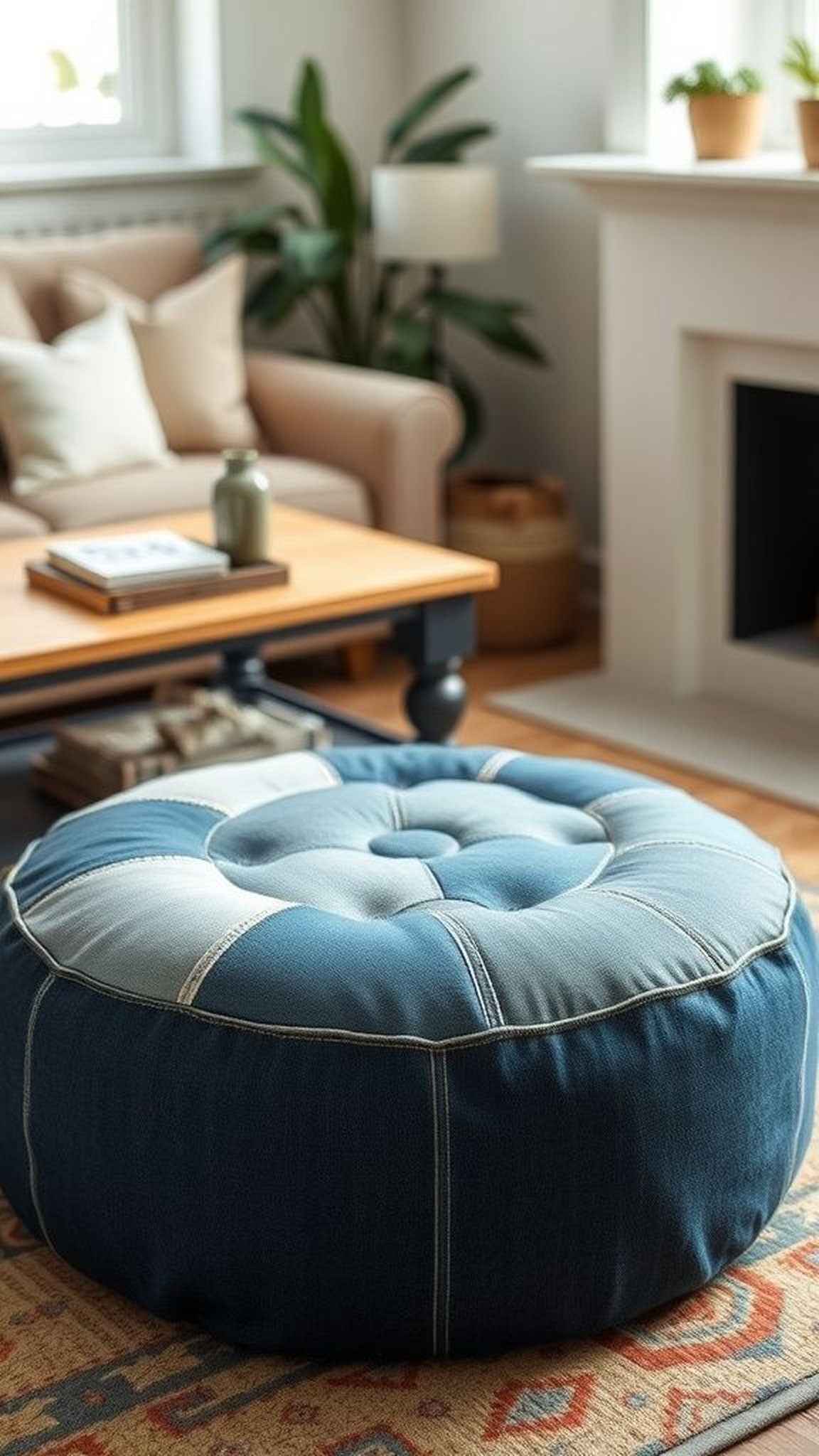
An ottoman pouf upholstered in repurposed denim becomes a casual anchor in the living area. Its surface shows quilted patches and bold stitching that tracks across the top, offering subtle grip when used as a footrest.
Sitting on it brings the faint creak of cotton and the dense feel of layered fabric under weight. The pouf carries a softness that invites crossing legs or leaning a tray of drinks, and the faded blues tell a small history of wear.
It reads as welcoming and relaxed rather than formal, a friendly spot for unwinding.
Steps
- Cut denim panels to fit the pouf dimensions and sew them into a cover.
- Add quilting lines or visible topstitching to reinforce and decorate the surface.
- Fit the cover over a soft foam or fiber-filled core and align seams carefully.
- Secure the cover opening with a hidden zipper or strong stitching.
- Adjust fills and surface tension to ensure an even, comfortable shape.
Jean-pocket wall organizer for small treasures
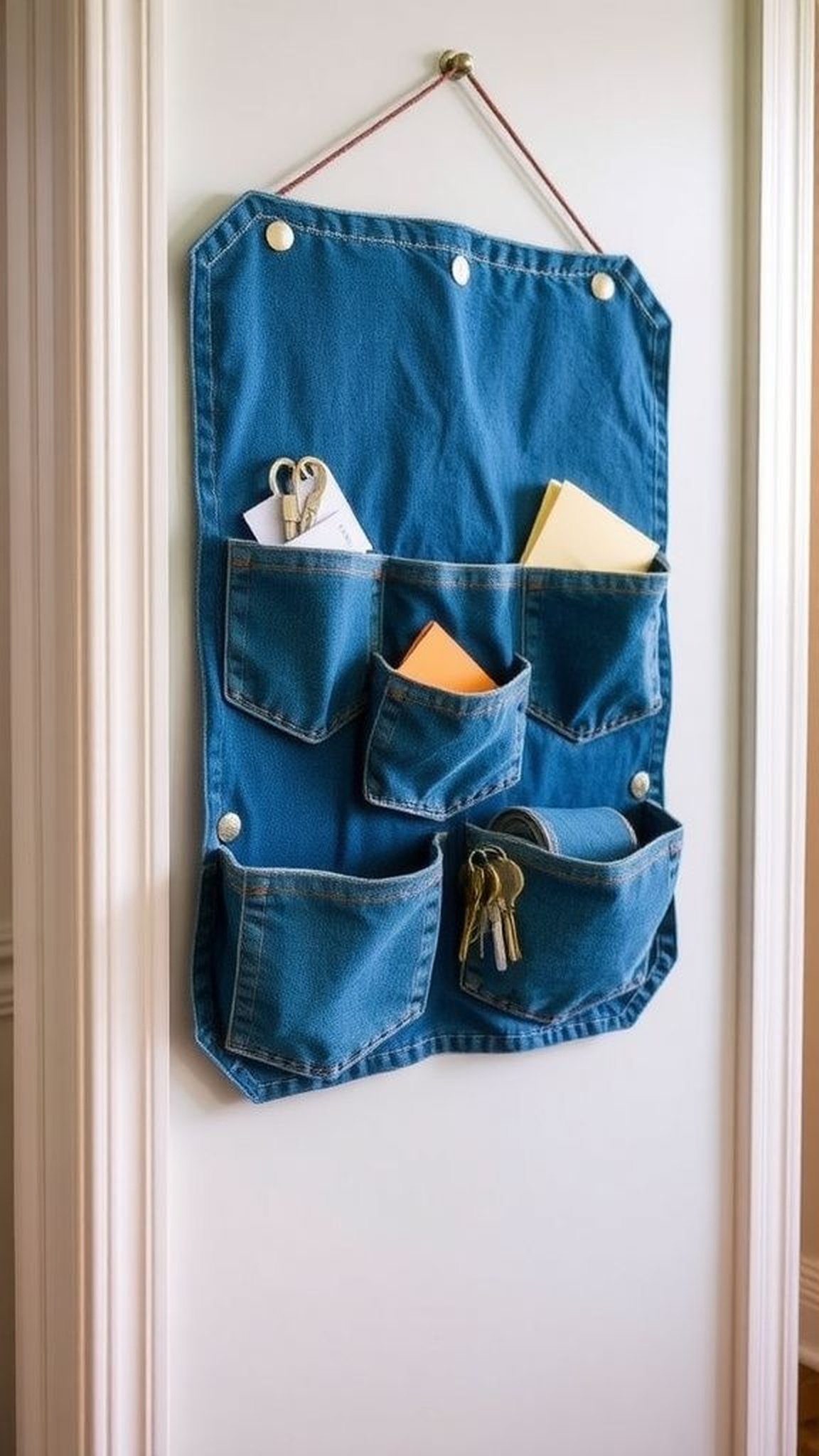
A wall organizer made from a cluster of jean pockets keeps tiny objects in plain sight and feels whimsically practical. Each pocket has its own personality, some worn soft, others still crisp, with rivets that catch light and bring a metallic glint.
Keys and little notes slide into their familiar folds, and the pockets emit a faint cotton scent when brushed. Placed near the door, it acts like a little stage for everyday items and its patchwork of blues reads as a tidy, friendly collector of small, often overlooked things.
Steps
- Arrange jean pockets in a layout on a backing fabric to determine placement.
- Sew pockets to the backing securely around edges, leaving openings accessible.
- Add hanging hardware or a decorative dowel to the top for wall mounting.
- Reinforce high-use pockets with extra stitching if needed.
- Hang the organizer and sort small items into the pockets.
Denim table runner with frayed edges and trim
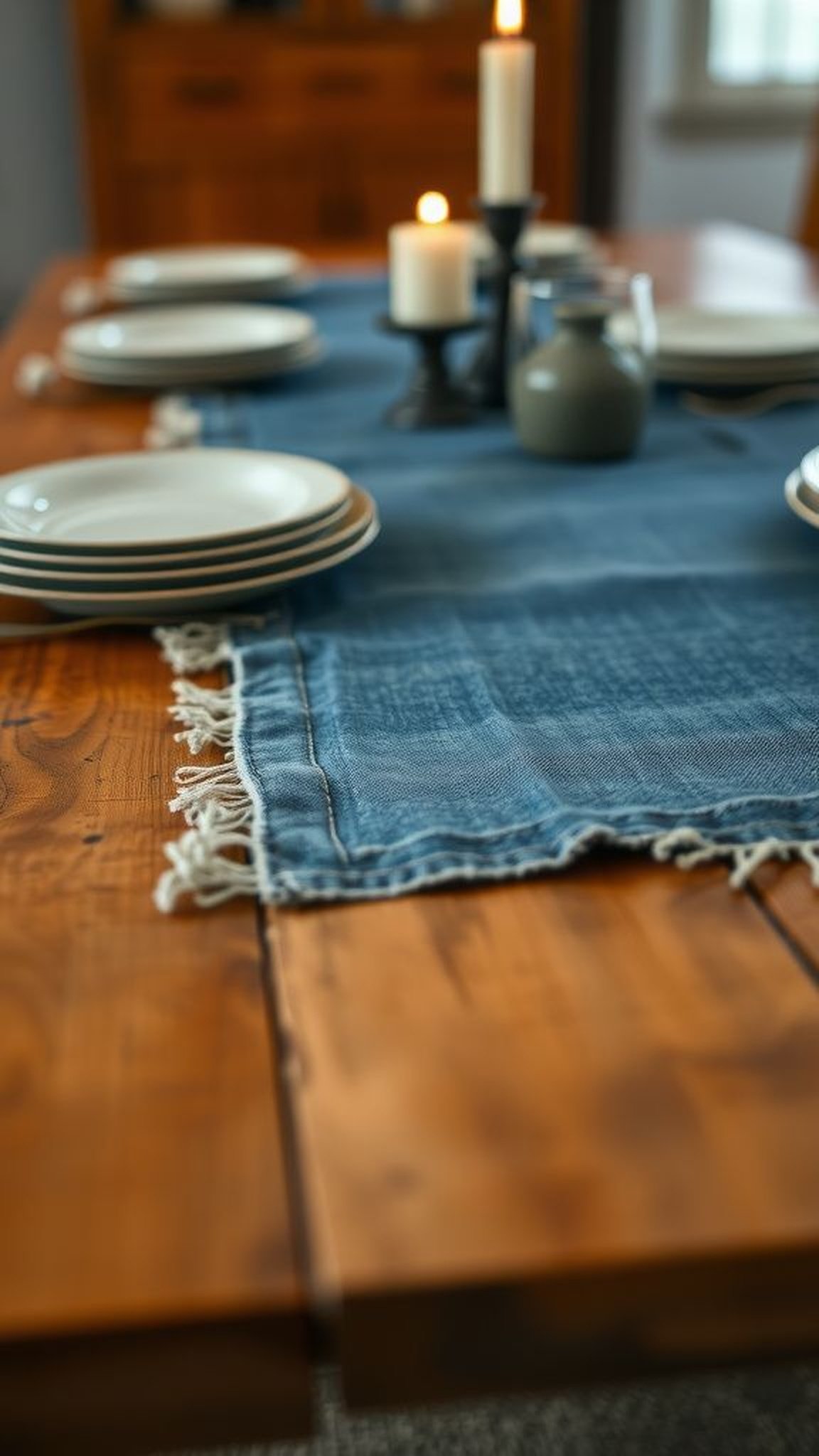
A narrow denim table runner laid along a rustic dining table brings casual texture to meal gatherings. The frayed edges create a soft halo that contrasts with the hard tabletop, and the denim’s weight keeps the runner in place without feeling stiff.
Plates and candlelight reflect differently across darker and lighter patches, and the fabric’s surface reveals little threads that catch a fingertip. There is a relaxed elegance to the piece, pairing well with mismatched ceramics and wooden serving boards, and it makes nightly dinners feel hand-centered and familiar.
Steps
- Measure the table length and cut denim to the desired runner dimensions.
- Create a layered hem or simple stitched edge and leave frayed sides where desired.
- Add decorative trims or stitched motifs for contrast if preferred.
- Press gently to smooth while preserving texture.
- Lay across the table and adjust edges for an even drape.
Indigo fringe denim placemats set for casual dinners
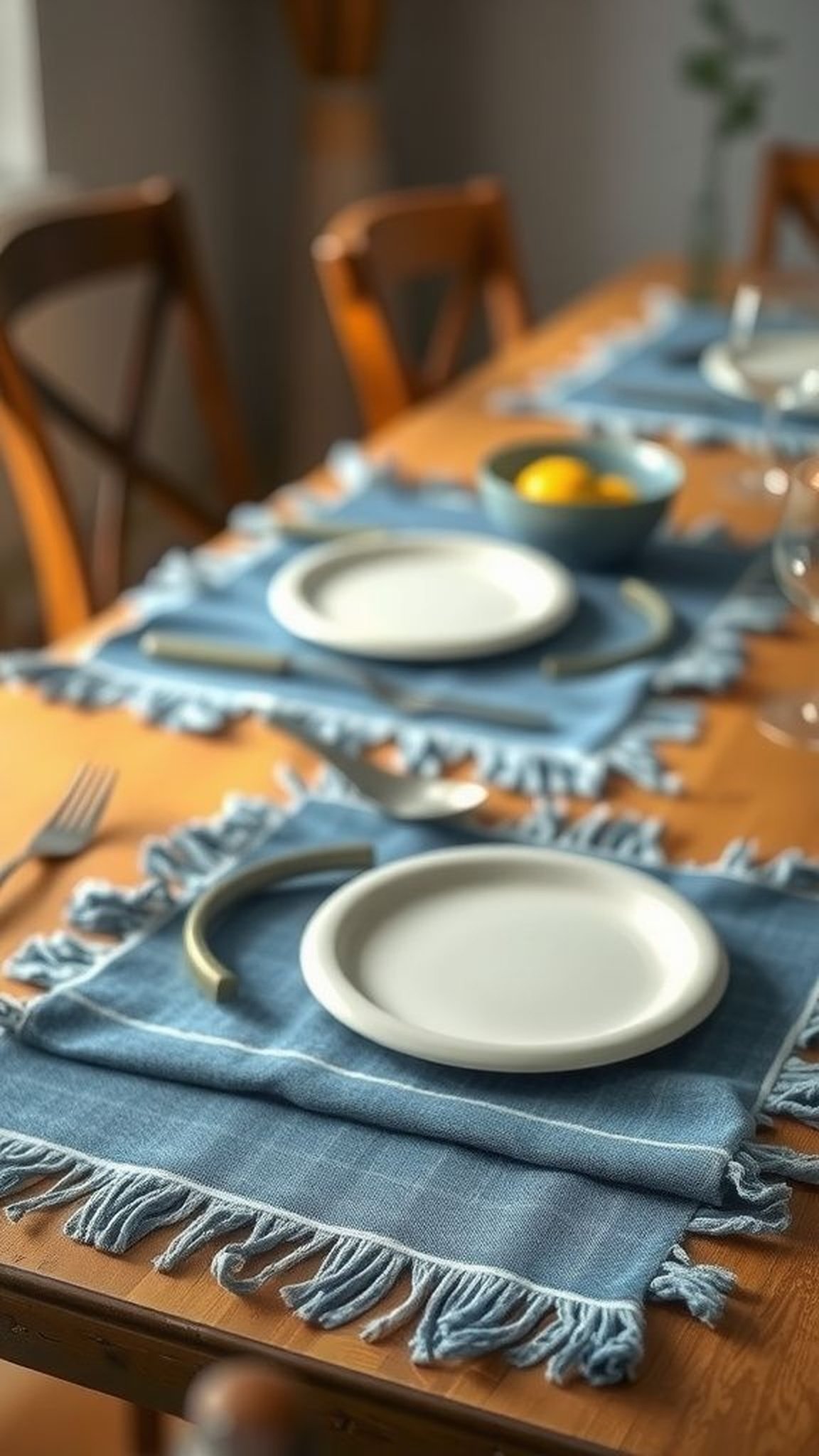
A set of indigo fringe placemats sits ready for an informal dinner, each edge trailing soft threads that move when plates are set. The weave of the denim is firm under flatware and the faded lines create a lived-in palette beneath dishes.
The fringe sings faintly when brushed and the placemats absorb minor splashes without fuss. Their presence adds a relaxed rhythm to the table, and the mix of deeper blues and pale stripes gives a familiar comfort, as if the table were always ready for neighbors dropping by with warm bread.
Steps
- Cut matching placemat rectangles from denim, allowing extra for fringe edges.
- Secure one edge to prevent uncontrolled unraveling while leaving fringe on others.
- Add decorative stitching around the central area to anchor layers.
- Gently wash to encourage natural fraying and soften the fabric.
- Iron lightly while keeping the fringe texture intact and set the table.
Denim lampshade with patch pockets for accents
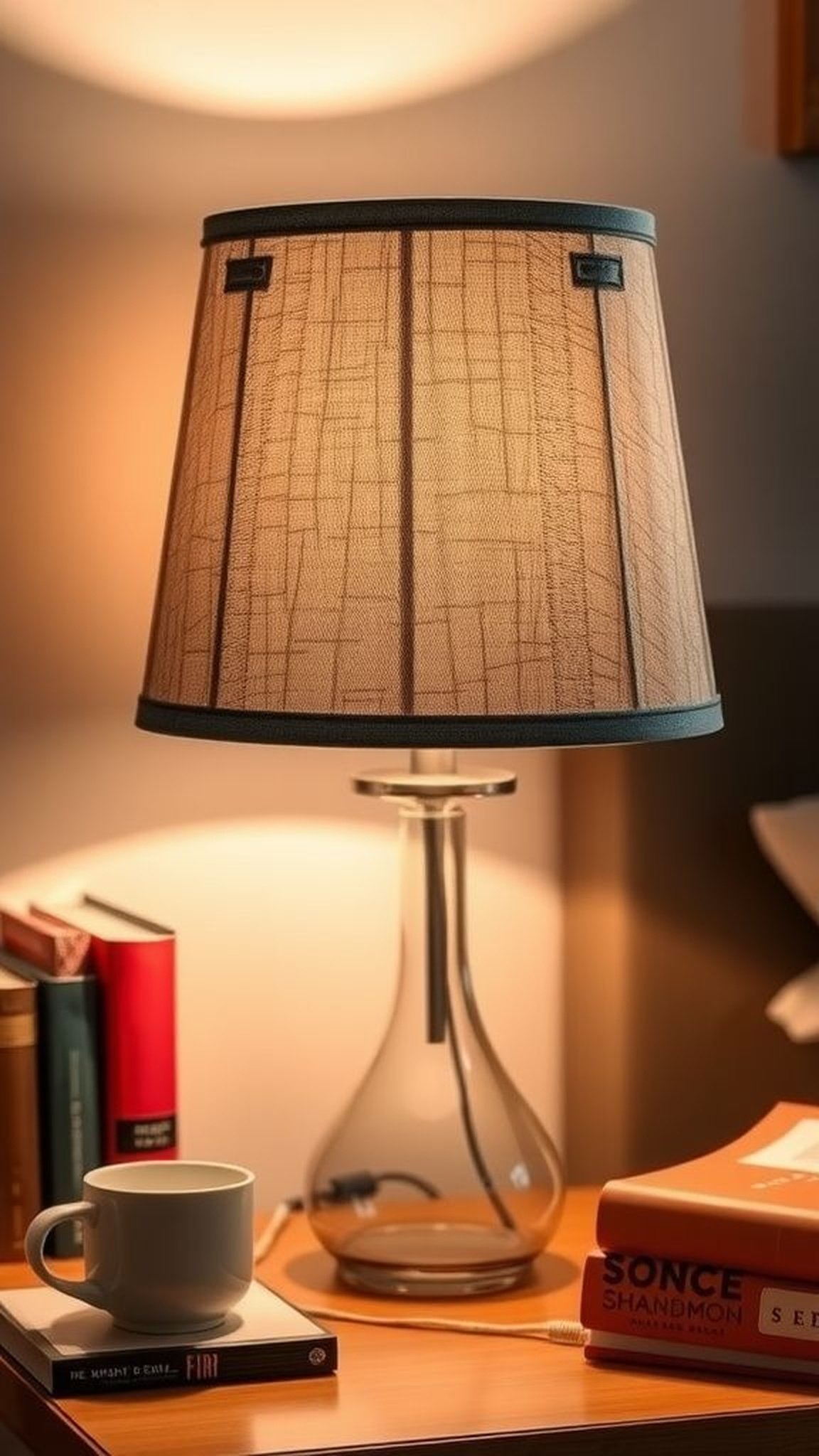
A lampshade wrapped in denim throws a warm, muted glow that softens overhead light into a cozy pool. Small pocket accents attached around the shade create playful shadow lines and offer tiny places for dried flowers or notes.
The denim surface filters the bulb’s brightness, and the seam lines cast subtle patterns on nearby walls. When the lamp is lit, the indigo mellows and the room gains a gentle evening hush.
The texture reads as familiar and comforting, making the light feel like it wears a well-loved garment.
Steps
- Measure the lampshade surface and cut denim to fit with overlap.
- Wrap the denim around the shade and secure edges with stitching or adhesive suited for fabric.
- Attach small pocket accents or trim for visual interest.
- Ensure ventilation remains for the bulb and adjust placement if needed.
- Place the lampshade on the lamp base and enjoy the softened light.
Upcycled denim quilted picnic blanket for outdoor naps
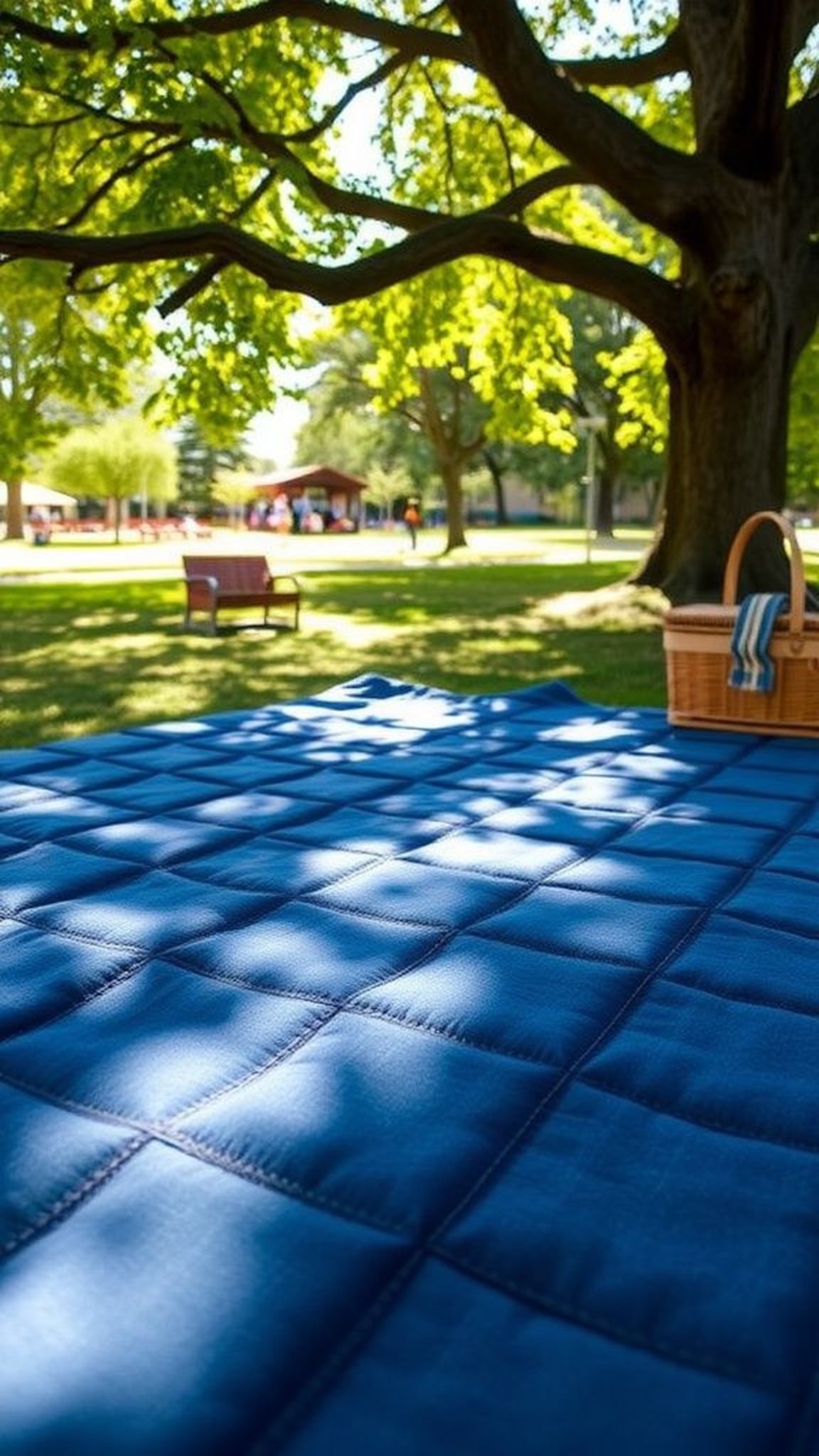
A quilted picnic blanket pieced from denim sits under a tree and creates a sturdy, familiar surface for lounging. The layered stitching makes a light grid that crinkles softly when someone shifts, and the thickness offers comfort on uneven ground.
Indigo patches of different ages create a mellow mosaic, and the blanket carries a faint scent of sun and cotton after time outdoors. Spreading it out invites a slow afternoon of reading or a nap, and each crease stores a memory of picnics past, picnic crumbs blending into the fabric’s gentle history.
Steps
- Lay out denim squares in a pleasing arrangement and sew them together into a large panel.
- Add a soft backing fabric and batting between layers for warmth and cushioning.
- Quilt through all layers with lines or patterns to secure the sandwich.
- Bind the edges with a sturdy fabric strip for durability.
- Wash and dry gently to soften and enhance the patched look before use.
Tubular denim bolster pillow in faded tones
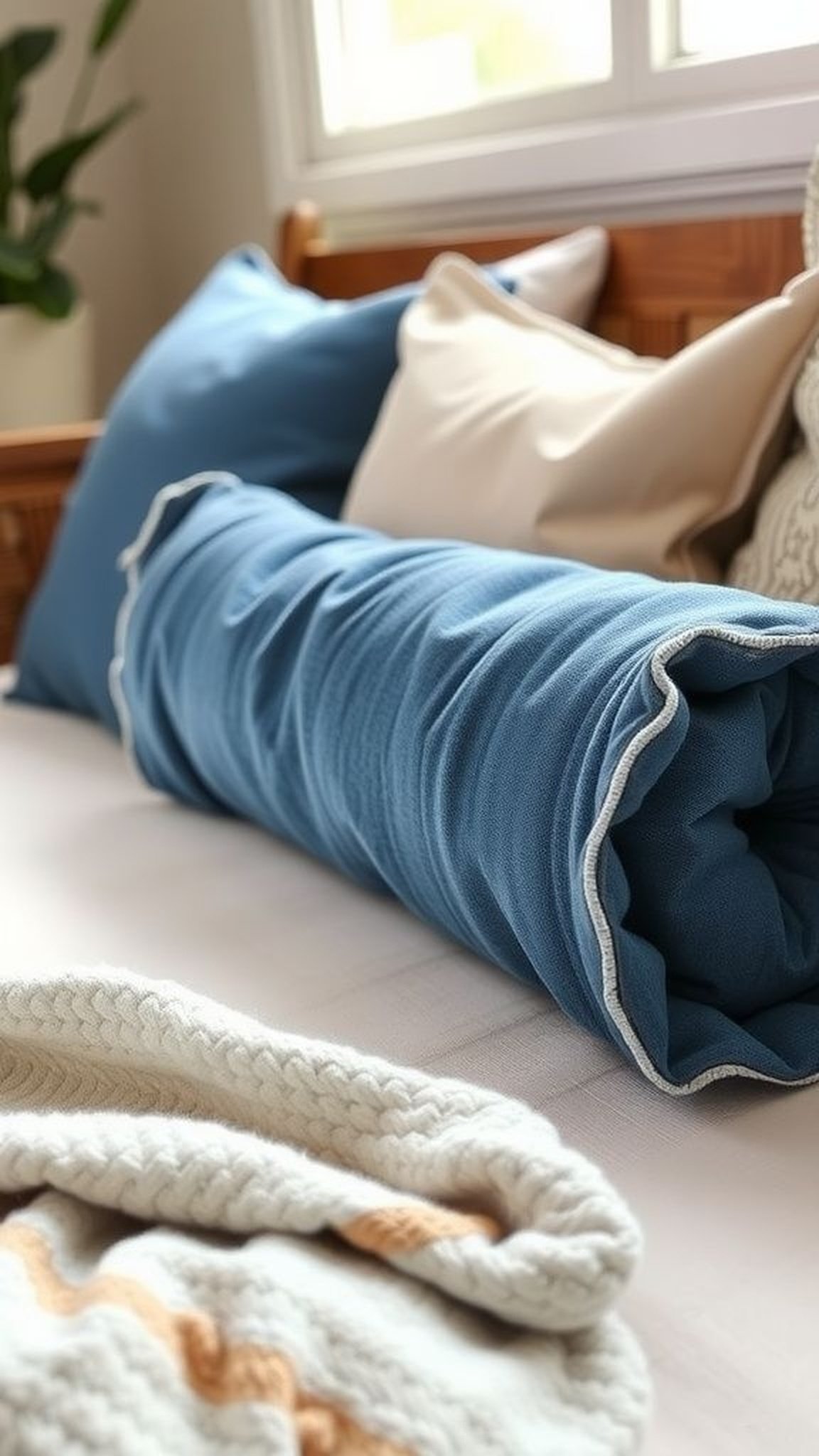
A tubular bolster pillow made from rolled denim rests at the head of a daybed and offers long, even support. Its cylindrical shape contrasts with square cushions, and the denim surface carries creases that feel familiar under the neck.
The faded tones form subtle rings and the stitching along the seam gives a faint tactile ridge. Leaning back against it produces the soft give of layered fabric and a hint of cotton scent.
It reads as practical and slightly nostalgic, like an old sweater repurposed into a comfortable, enduring accent.
Steps
- Cut denim into a rectangular panel sized for the desired bolster circumference.
- Sew the long edge to form a tube and close one short end securely.
- Insert a cylindrical filler and adjust for even density.
- Close the remaining end with sturdy stitching and finish the seam.
- Optionally add decorative topstitching or a removable cover feature.
Denim drawer liners giving soft cotton scent inside
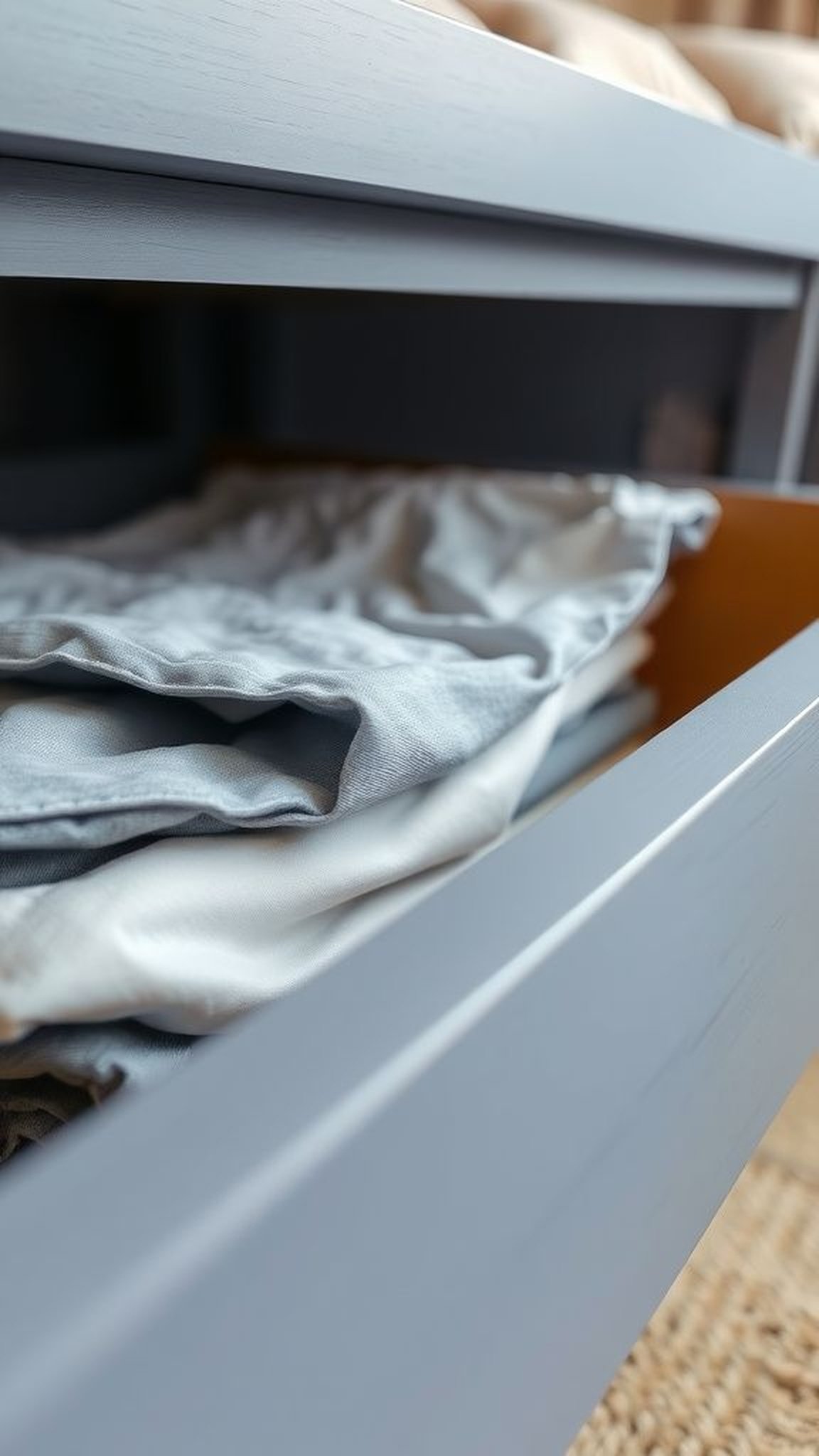
Lining a dresser drawer with denim brings a soft reassuring scent of cotton to folded linens and sweaters. The fabric provides gentle friction that keeps delicate items from sliding, and the muted blues gleam faintly when the drawer opens.
There is pleasure in tucking socks against the denim and feeling the slightly rough surface under hand when retrieving a scarf. Over time the liner absorbs small traces of wear and tiny lint, adding to a sense of domestic continuity, a quiet reminder of hands and days spent organizing small parts of life.
Steps
- Measure drawer interiors and cut denim panels to fit each compartment.
- Hem edges if desired to reduce fraying and create a neat appearance.
- Place liners smoothly into drawers and trim any excess for a precise fit.
- Replace items and smooth surfaces occasionally to maintain freshness.
- Remove and wash liners periodically to keep the fabric smelling clean.
Denim planter sleeves wrapped around ceramic pots
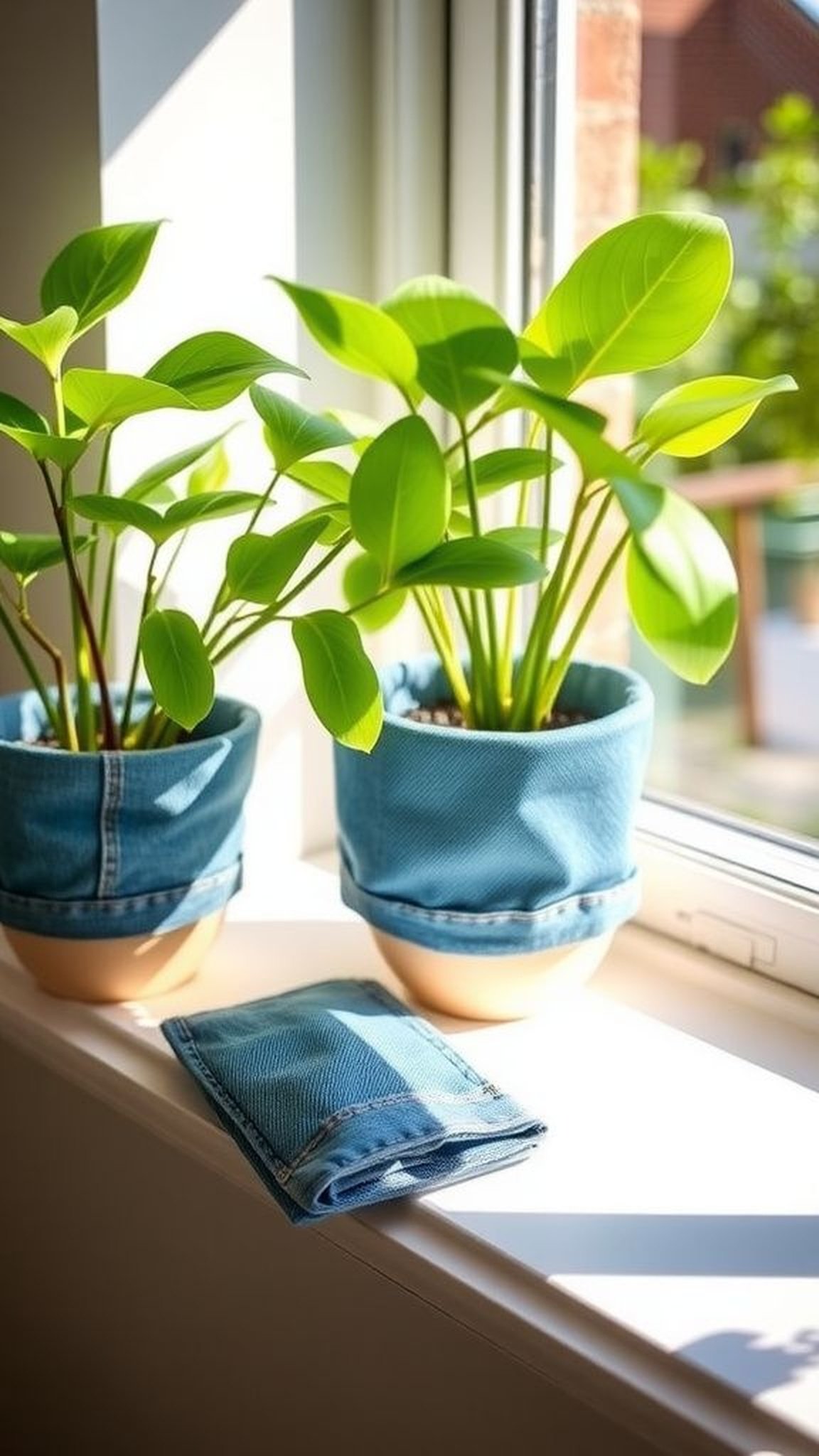
Ceramic planters softened by denim sleeves sit on a windowsill and bring a tactile warmth to houseplants. The denim hugs the pot shape and the folded hems create little ledges for decorative soil markers.
Light filters through leaves and casts blue-tinted shadow along the fabric, and the rough cotton contrasts pleasantly with smooth ceramic. The sleeves absorb tiny dampness and the overall effect is homey, marrying natural greenery with recycled textile.
Watering days leave a faint scent of earth and cotton, and the plants feel right at home in their denim-clad homes.
Steps
- Measure pot circumference and cut denim slightly larger for overlap and seam allowance.
- Sew a simple cylinder from the denim and hem the top edge for a clean finish.
- Slide the sleeve over the pot and fold the top edge if a cuff is desired.
- Remove sleeves before heavy watering to prevent prolonged dampness against fabric.
- Wash and reshape sleeves occasionally to refresh their appearance.
Denim napkin rings tied with twine for casual settings
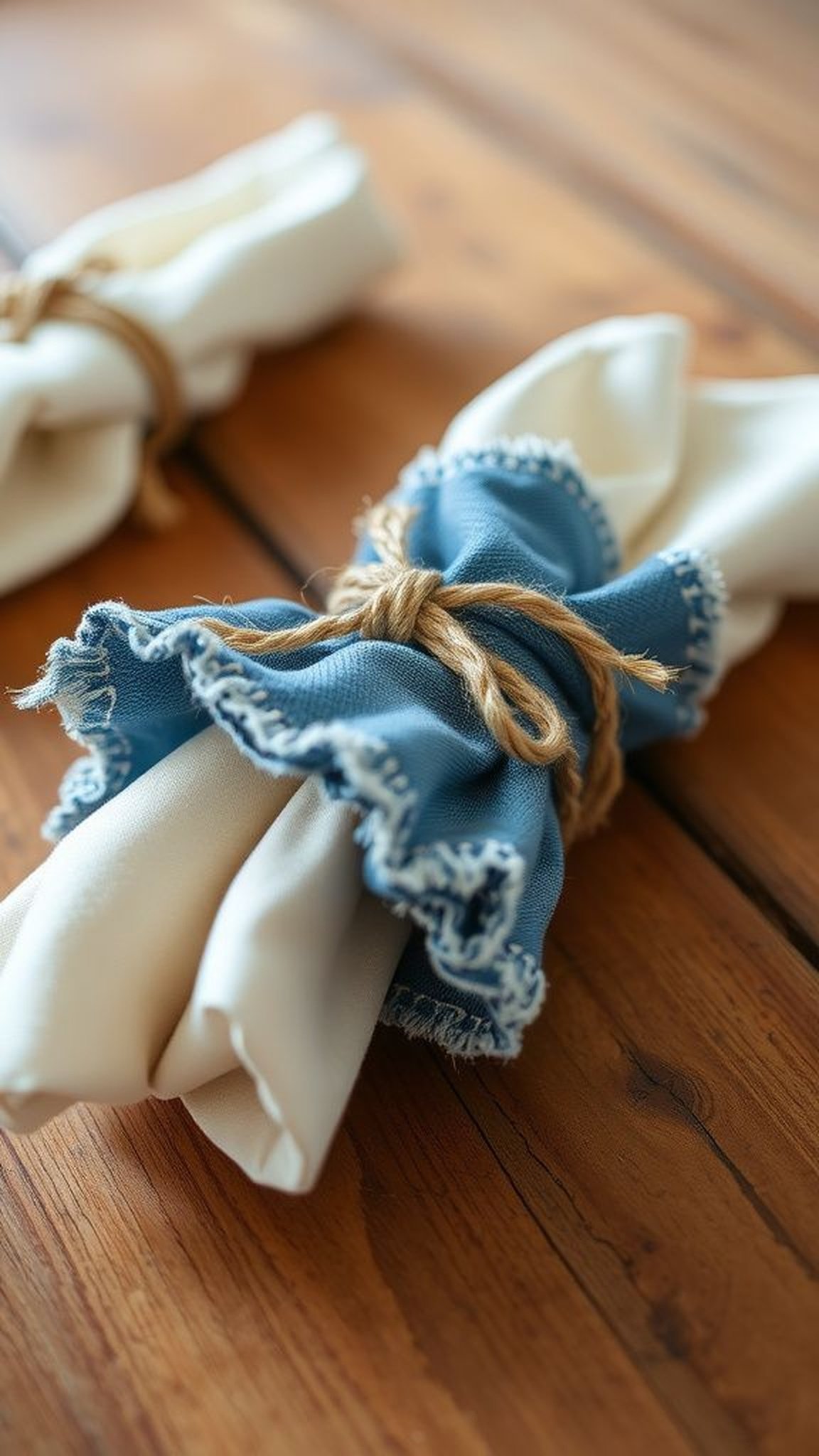
Simple denim napkin rings add a friendly, tactile touch to a casual table setting. Small strips of denim wrap around linen napkins and are bound by a bit of twine that smells faintly of fiber and wood.
The denim edges show gentle fraying and the texture contrasts with smooth plate surfaces, giving cutlery a grounded frame. The rings sit comfortably in the hand as napkins are passed, and the blue tones coordinate with earthy tableware, creating a welcome, informal rhythm that matches relaxed meals and long conversations.
Steps
- Cut short denim strips and form rings by overlapping ends and stitching them closed.
- Wrap a short piece of natural twine around each ring and tie a small knot or bow.
- Slide linen napkins through the rings and adjust the twine for balance.
- Arrange napkins at each place setting for a cohesive table look.
- Store rings flat between uses to preserve shape.
Denim-covered photo frames with stitched borders
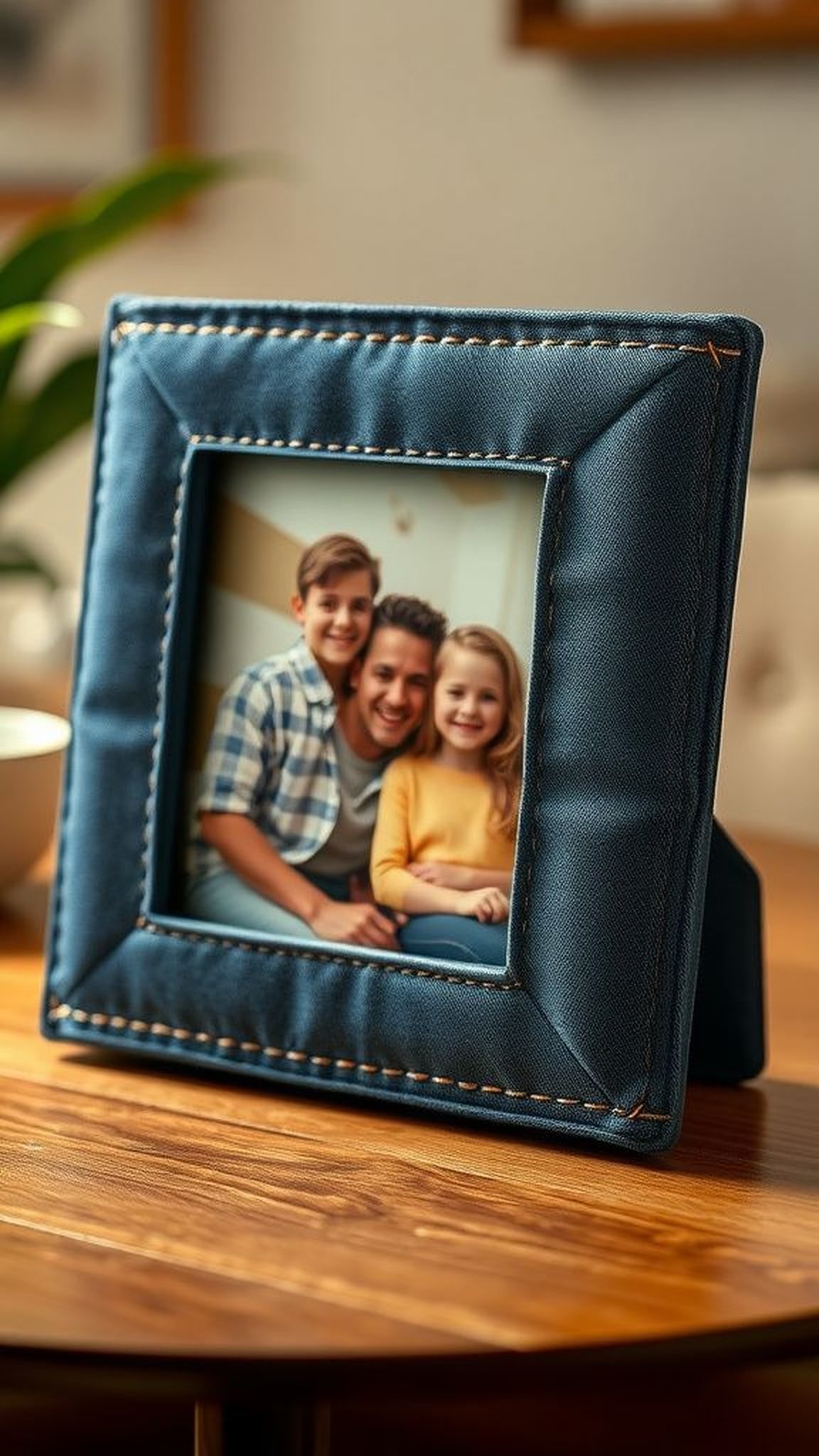
A photo frame cloaked in denim brings a tactile border to cherished images, and stitched borders add a subtle hand-made flourish. The fabric softens the frame’s angles and the stitches cast thin lines of shadow that complement the photograph.
The denim often carries a faint thread of old rivet marks or hem impressions, which makes each frame feel storied. Placing a family snapshot inside, the frame presents the picture with an approachable warmth, making it feel less like an exhibit and more like something meant to be touched and smiled at often.
Steps
- Measure the frame face and cut denim pieces to wrap around with slight overlap.
- Adhere or stitch the denim to the frame, keeping corners neat and smooth.
- Add decorative stitched borders by sewing along the frame edge for contrast.
- Reassemble the frame with the photograph and secure the backing.
- Place on a shelf or hang on the wall to enjoy.
Denim-adorned fabric bulletin board for notes
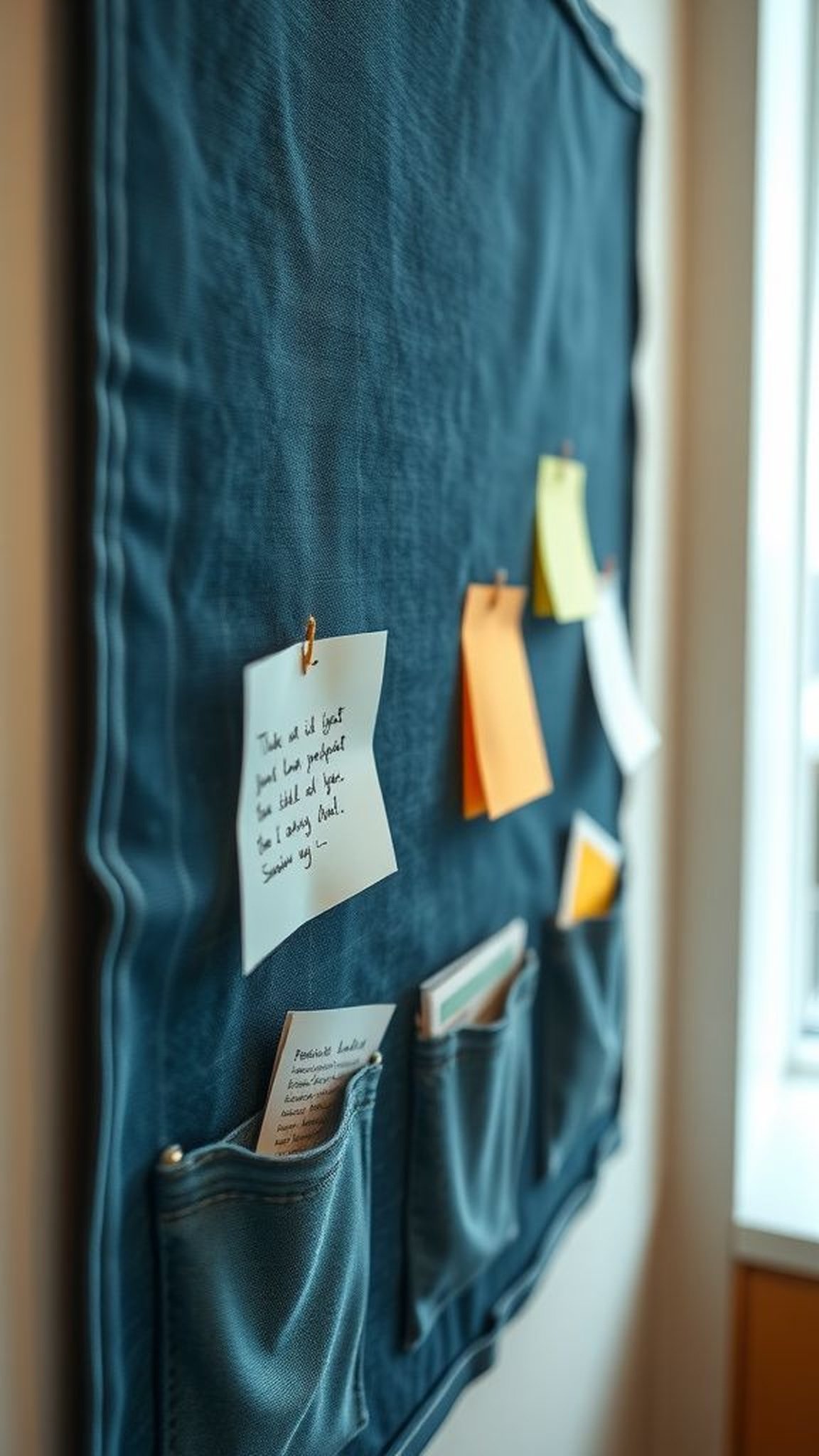
Pinning notes to a fabric bulletin board wrapped in denim makes messages feel more personal. The board’s surface yields slightly to pushpins and the indigo background makes paper colors pop.
Small pockets sewn onto the surface keep loose receipts and small mementos, and the texture encourages hands to smooth and rearrange clippings. The denim’s worn marks and faded streaks provide a comforting backdrop to reminders and doodles, and the whole piece sits like a domestic altar for everyday life, collecting the small artifacts of schedules and stray thoughts.
Steps
- Cover a bulletin board base with denim fabric, smoothing and securing the material at the back.
- Add small sewn pockets onto the surface for extra storage and visual interest.
- Insert pins and arrange notes, photos, and small keepsakes as desired.
- Refresh or rearrange pockets periodically to keep the board functional.
- Hang at a convenient height and enjoy the tactile workspace.
Denim bottle wrap for vases and candle sleeves
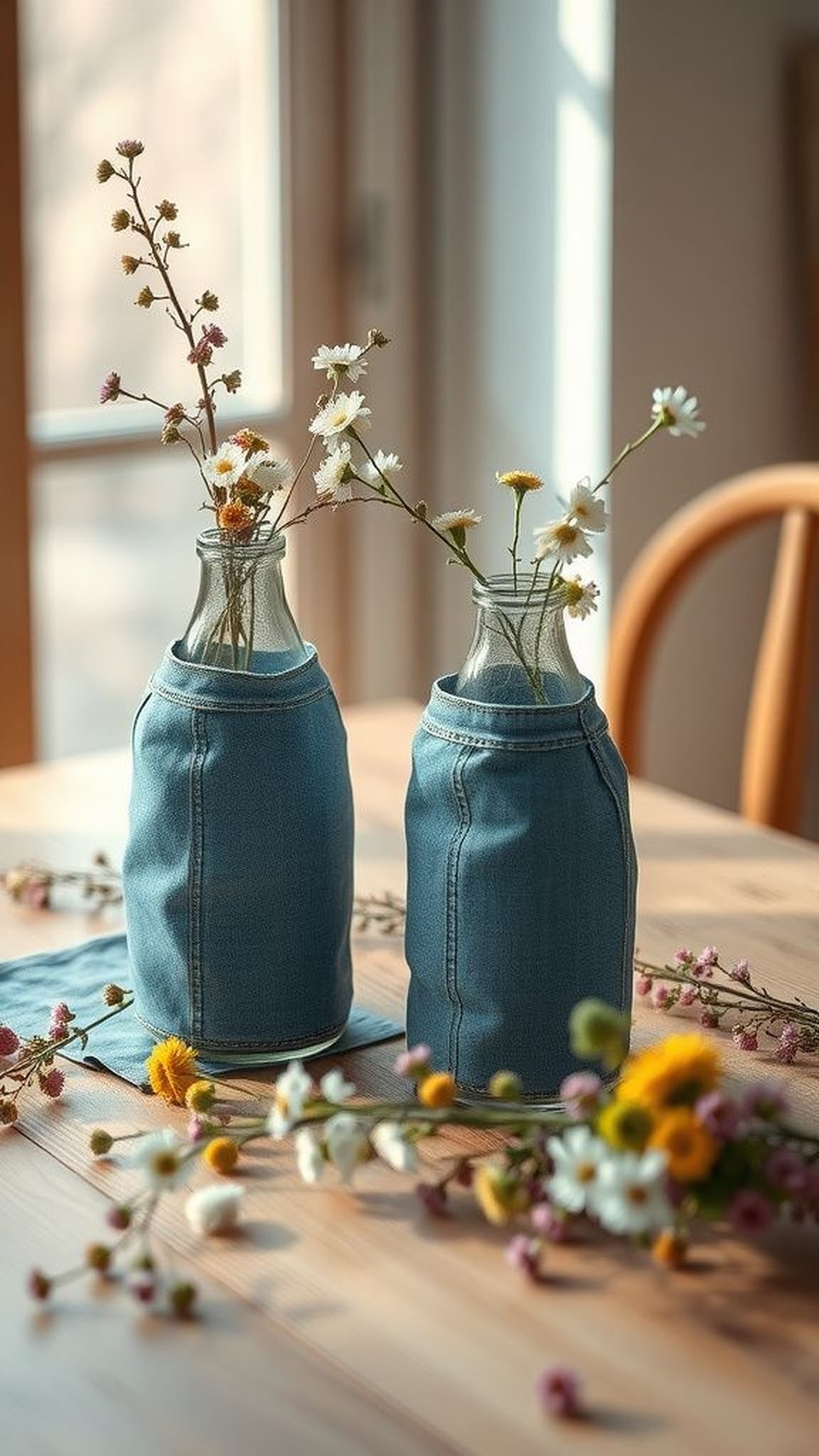
A glass vase sheathed in denim takes on a quaint, grounded look when filled with wildflowers or dried stems. The denim muffles reflection and brings a muted, tactile surface to otherwise smooth glass.
Candle sleeves made from denim cast a softer light, as the fabric filters glare and creates gentle shadow play on surrounding surfaces. The smell after a while can suggest lived warmth, and the pairing of bright petals with indigo cloth feels pleasantly cultured yet unpretentious, like a small gesture of care placed on a kitchen table.
Steps
- Measure the circumference and height of bottles or vases and cut denim to fit.
- Wrap the denim snugly and secure seams with stitching or fabric-friendly adhesive.
- For candle sleeves, ensure material sits safely away from open flame and use glass inserts.
- Add small embellishments like twine or buttons for character.
- Arrange wrapped vessels together for a cohesive tabletop display.
Denim key hanger with buttons and stitched loops
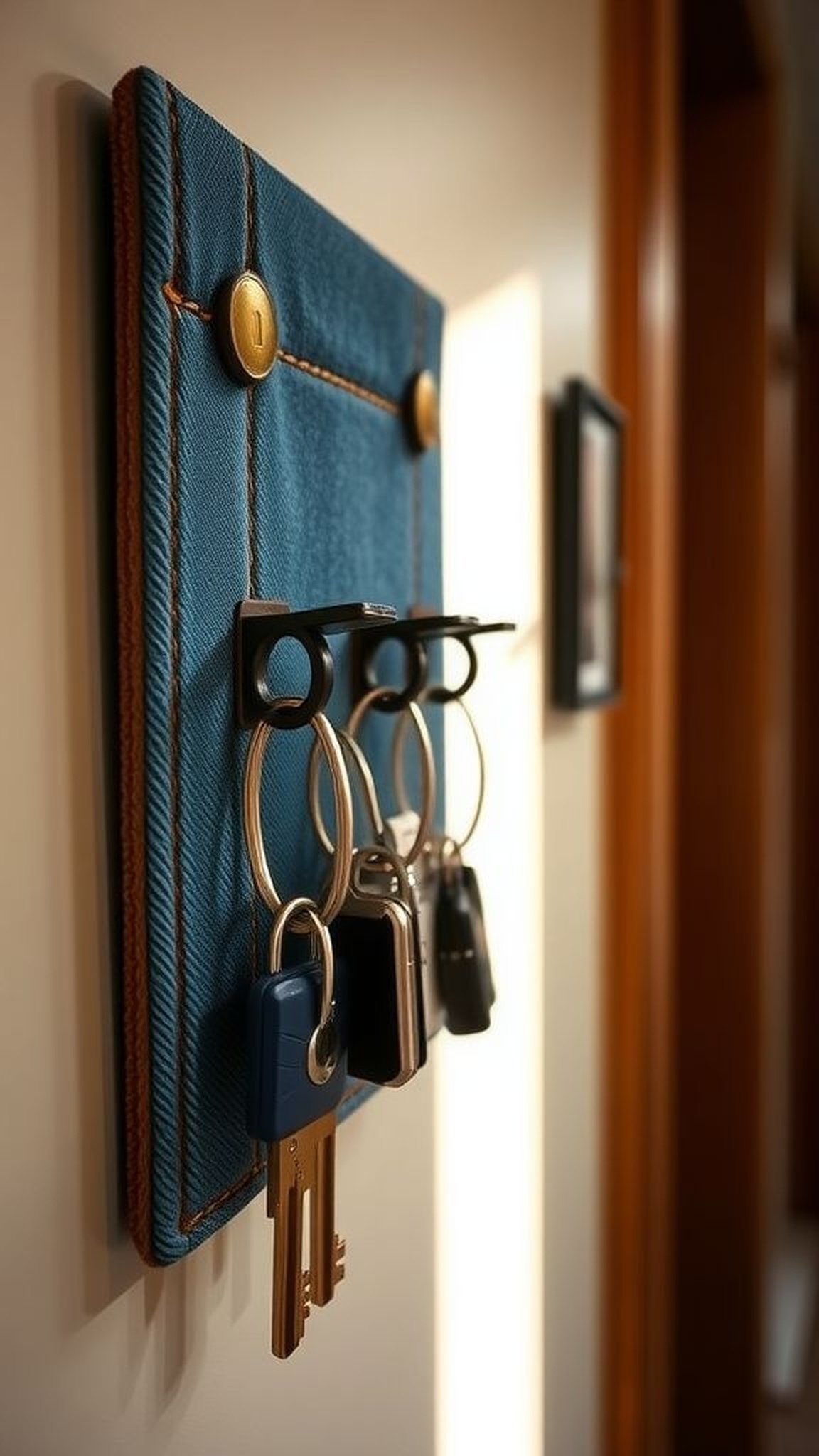
A small key hanger fashioned from denim hangs by the door and gives a satisfying click when keys are returned. Buttons salvaged from old jeans glint in the light and stitched loops cradle each ring, offering a little ceremony to the act of arrival.
The denim base shows wear in subtle streaks where palms have smoothed it over time, and the piece emits the faint scent of cotton that feels welcoming. It turns a rushed moment into a tiny pause, with fabric and metal combining into a domestic ritual that calms the threshold.
Steps
- Cut a denim strip to serve as the base and attach sturdy hooks or loops evenly along its length.
- Sew button accents or reinforced patches behind each hook for strength and charm.
- Add a hanging method at the top such as a stitched loop or mounted hardware.
- Secure the hanger to the wall at a convenient height.
- Arrange keys on hooks and enjoy the organized entry point.
Denim memory patch quilt from children’s jeans

A memory quilt stitched from children’s old jeans lies folded on a bed and reads like a textile diary. Tiny knee patches and faded pocket marks form tender motifs, and the quilt’s surface is a collage of small histories.
The fabric is thicker where hems were doubled and lighter where sun faded it, and the quilt emits a gentle, familiar scent that brings quiet smiles. Wrapping in it feels like stepping into a sequence of summers, scraped knees, and school projects, each square keeping a small piece of shared life at hand.
Steps
- Collect jean pieces with sentimental wear and cut them into uniform squares.
- Sew the squares together into rows and join rows to form the quilt top.
- Add a suitable batting and backing fabric, then quilt through all layers.
- Finish edges with binding and inspect seams for durability.
- Wash gently to soften and settle the quilt before regular use.